Pingxiang Baitian New Materials Co., Ltd

Leave Your Message

China Best Zirconia Alumina Beads Supplier?

Choosing the China Best Zirconia Alumina Beads Supplier? requires more than comparing prices. Bead quality directly affects milling efficiency, contamination levels, equipment wear, and production stability. In practical use, a well-selected bead should maintain consistent size, density, roundness, and chemical resistance throughout long grinding cycles.

Industry data supports this growing focus. Grand View Research’s ceramic balls market analysis identifies ceramics as important materials for demanding processing environments, including chemical, industrial, and advanced manufacturing applications. MarketsandMarkets’ Grinding Media Market research also highlights rising demand for high-performance media in mineral processing, chemicals, paints, coatings, and pharmaceuticals. These reports do not prove that every Chinese supplier offers equal value. They show why technical verification matters.

Zirconia Alumina Beads are often selected when customers need stronger wear resistance than conventional glass or low-grade ceramic media. Their performance depends on formulation, sintering control, bead density, and surface finish. A supplier should provide measurable specifications, not only attractive product photographs. Ask for bulk density, crushing strength, size tolerance, wear-loss testing, and batch traceability. Small details matter.

A reliable Chinese manufacturer should also explain its testing method. ISO-based quality systems can improve consistency, but certification alone is not enough. Request samples from different production batches. Compare residue levels after milling. Check whether the beads remain smooth under a microscope.

No supplier is perfect. Some published data may be incomplete, and laboratory results may not match your mill. This is where careful trials, transparent communication, and documented technical support become essential. The best supplier is not simply the cheapest. It is the partner that can repeatedly deliver stable Zirconia Alumina Beads for your specific process.

China Best Zirconia Alumina Beads Supplier?

What Are Zirconia Alumina Beads and How Are They Made?

China Best Zirconia Alumina Beads Supplier?

What Are Zirconia Alumina Beads and How Are They Made?

Zirconia alumina beads are engineered grinding media for high-energy milling. They combine zirconium oxide with aluminum oxide in a dense ceramic structure. Zirconia improves toughness and impact resistance. Alumina helps control cost and hardness. This balance reduces bead breakage during continuous processing.

The USGS Mineral Commodity Summaries 2024 reported about 1.2 million metric tons of zirconium mineral concentrates produced worldwide in 2023. That figure reflects raw-material supply, not finished bead output. A 2024 advanced ceramics market analysis projects annual growth of roughly 6% through 2029. Market estimates vary, though. They should not replace laboratory testing.

Manufacturing begins with controlled powders, water, and dispersing agents. The mixture is wet-milled until particle size becomes uniform. Spray drying then forms free-flowing granules. These granules are pressed or shaped into round blanks. Pre-sintering removes moisture and organic additives. Final sintering develops density and strength at carefully controlled temperatures. The beads are then sorted, polished, and inspected for diameter, density, crushing strength, and surface defects.

Small differences matter. A rough surface can increase contamination and equipment wear. ISO 13356:2021 provides useful guidance for zirconia-based ceramic materials, but finished bead performance still depends on formulation and processing. In practice, a supplier should provide batch data, density results, and wear-test conditions. Without those details, “high performance” remains an attractive claim, not reliable evidence.
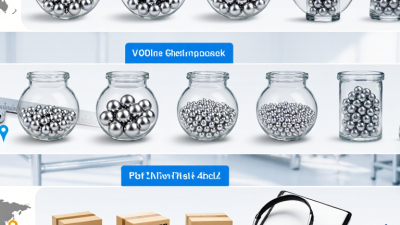

China Best Zirconia Alumina Beads Supplier? What Are Zirconia Alumina Beads and How Are They Made?

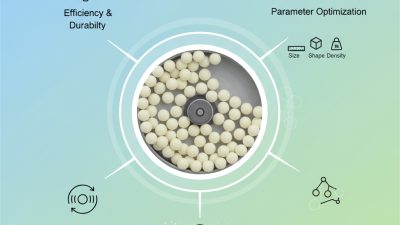
Zirconia alumina beads are ceramic grinding media made by combining alumina powder with zirconium oxide. The material is shaped, dried, heat-treated, and sintered to achieve high hardness, wear resistance, and improved fracture toughness. The chart shows typical temperature ranges used during key manufacturing stages; actual conditions vary with composition, bead size, and production equipment.

Typical process temperatures: spray drying is generally performed with hot air, calcination removes volatile components and stabilizes the powder, and high-temperature sintering densifies the finished beads. These values represent general ceramic-processing ranges and are not company-specific data.

Which Properties Define High-Quality Zirconia Alumina Beads?

China Best Zirconia Alumina Beads Supplier?

High-quality zirconia alumina beads begin with controlled composition, not attractive packaging. The 2024 USGS Mineral Commodity Summaries reported approximately 1.5 million metric tons of global zirconium mineral concentrate production in 2023. Large supply does not guarantee consistent bead performance. Manufacturers must control zirconia content, alumina distribution, sintering temperature, and internal porosity.

Density is a practical quality signal. Many zirconia alumina beads measure roughly 4.0–5.5 g/cm³, depending on formulation and test method. Higher density usually improves impact energy and grinding efficiency. It can also increase equipment load. Hardness, roundness, crushing strength, and size distribution deserve equal attention. ASTM C20 methods can help verify apparent density and porosity in fired ceramic materials. Low porosity matters. It limits liquid absorption and reduces hidden cracking.

Wear loss should be tested in the actual mill, not only in a laboratory jar. A 2024 ceramic media market analysis by Grand View Research identifies wear resistance, chemical stability, and particle-size consistency as major purchasing factors. The best beads should release minimal contamination during long cycles. Check slurry samples for zirconium, aluminum, and unexpected impurities. Ask for batch-level test records, not general claims. A supplier may publish impressive hardness figures, yet overlook edge chipping. That shortcut can fail. No single number tells the whole story.

How to Evaluate a Zirconia Alumina Beads Supplier in China?

How to Evaluate a Zirconia Alumina Beads Supplier in China?

A reliable evaluation starts with production evidence, not attractive photographs. The ISO Survey 2022 reported more than one million valid ISO 9001 certificates worldwide, so certification alone proves little. Ask for the certificate scope, issuing body, audit date, and factory address. Then request recent batch records showing chemical composition, bulk density, bead-size distribution, crushing strength, and wear loss. For milling applications, compare samples under identical conditions. A bead that looks smooth may still create excessive contamination. I have seen suppliers provide excellent samples but inconsistent replacement batches. That risk deserves attention.

Technical data should connect with logistics. The World Bank Logistics Performance Index 2023 ranked China 19th globally, with a score of 3.7 out of 5. This suggests strong export capability, but it does not confirm packaging quality or delivery discipline. Check moisture-proof inner bags, carton strength, pallet photographs, and shipment records. Ask whether the supplier keeps retain samples for every lot and accepts independent laboratory testing. The 2024 USGS Mineral Commodity Summaries also shows zirconium remains a globally traded industrial mineral, making raw-material traceability important. Request the zirconia and alumina origin, formulation range, and certificate of analysis. Do not accept vague terms such as “high purity” without numerical limits. One weakness remains: supplier websites rarely reveal long-term wear data. A small pilot test may be wiser than a large first order.

What Industries Use Zirconia Alumina Beads?

Zirconia alumina beads serve industries that need efficient, contamination-controlled grinding and dispersion. Their high density transfers strong impact energy to hard particles. Their wear resistance also supports longer production cycles. These properties make them useful in coatings, printing inks, pigments, and industrial paints. Operators often use them to reduce particle size and improve color uniformity.

Ceramic manufacturers use these beads for glaze, ceramic slurry, and advanced technical materials. Electronics producers may select them for dispersing fine powders used in insulating or conductive formulations. Mineral processing facilities also use them for laboratory and production milling. In battery-material processing, bead selection requires careful control of contamination, temperature, and slurry viscosity. Small process changes matter.

A practical supplier should provide bead composition, density, size tolerance, and wear data. These details help engineers match the media to equipment speed and material hardness. Bead size is not a universal answer. Smaller beads improve fine dispersion, while larger beads may handle coarse feed more effectively. Selection is not always straightforward. Production trials can expose problems that laboratory tests miss, including excessive heat or unexpected bead loss. Regular inspection of the mill, separator, and slurry can reveal these issues early. Experienced purchasing teams should request batch consistency records and application guidance before making a large order.

China Best Zirconia Alumina Beads Supplier? - What Industries Use Zirconia Alumina Beads?

Industry Typical Materials Processed Common Grinding or Dispersion Process Why Zirconia Alumina Beads Are Used Typical Bead Size Range Key Selection Criteria
Architectural and Industrial Coatings Titanium dioxide, iron oxides, organic pigments, fillers and resin-based formulations Wet grinding, pigment dispersion and high-speed bead milling High density and hardness support efficient particle-size reduction while helping maintain consistent color development Approximately 0.3–2.0 mm Low wear rate, chemical compatibility, narrow size distribution and suitable mill separation system
Printing Inks Organic pigments, carbon black, varnishes and solvent- or water-based ink systems Fine wet dispersion in horizontal or vertical bead mills Small, durable beads can improve dispersion efficiency and help produce uniform pigment strength and gloss Approximately 0.1–1.0 mm Surface smoothness, bead roundness, low contamination and compatibility with the ink formulation
Ceramics and Advanced Ceramics Alumina, zirconia, silicon carbide, ceramic frits and technical ceramic powders Wet milling, slurry homogenization and deagglomeration High wear resistance helps limit foreign-particle contamination during preparation of fine ceramic slurries Approximately 0.3–3.0 mm Material purity, density, fracture resistance and resistance to acidic or alkaline slurries
Electronic and Electrical Materials Dielectric powders, conductive powders, ferrites, electrode materials and ceramic capacitor formulations Controlled wet grinding and dispersion of functional powders Stable milling performance can support tight particle-size control and reduce contamination risks in sensitive formulations Approximately 0.1–1.0 mm Purity, trace-element control, low wear, dimensional consistency and documented quality control
Mineral and Industrial Filler Processing Calcium carbonate, kaolin, talc, silica, dolomite and other non-metallic minerals Wet ultrafine grinding and classification preparation Higher density than many conventional ceramic media can improve impact and energy transfer in suitable mills Approximately 0.5–3.0 mm Operating cost per ton, bulk density, wear resistance, slurry compatibility and mill throughput
Inorganic Pigments Iron oxide, chromium oxide, ultramarine and other mineral-based pigments Wet grinding, deagglomeration and color-strength development Durable grinding media can provide repeatable dispersion with reduced media breakdown in demanding slurries Approximately 0.3–2.0 mm Color contamination control, chemical resistance, bead wear and final particle-size target
Battery and Energy Materials Selected cathode, anode, ceramic electrolyte and conductive additive formulations Wet dispersion, particle-size reduction and slurry homogenization Can be considered where controlled grinding energy and low media wear are required for fine functional powders Approximately 0.1–1.0 mm Purity, metal contamination limits, chemical stability, temperature control and process validation
Cosmetics and Personal-Care Ingredients Pigments, mineral powders, opacifiers and selected oil- or water-based dispersions Fine dispersion and homogenization in laboratory or production bead mills Wear-resistant media can help achieve smooth, uniform dispersions when the formulation and equipment are compatible Approximately 0.3–1.0 mm Raw-material compliance, cleanability, low wear, formulation compatibility and batch consistency
Specialty Chemicals Dispersions, catalysts, additives, agrochemical active ingredients and functional compounds Wet milling, deagglomeration and controlled particle engineering High hardness and density are useful for demanding formulations requiring repeatable milling performance Approximately 0.1–2.0 mm Solvent resistance, chemical inertness, contamination control, particle-size distribution and documentation

Note: Bead size ranges are general process-selection ranges. The appropriate size, composition, density and filling level depend on the mill design, separator opening, slurry viscosity, target particle size and formulation chemistry.

How to Compare Pricing, Quality, and Service Before Ordering?

China Best Zirconia Alumina Beads Supplier?

How to Compare Pricing, Quality, and Service Before Ordering?

Comparing zirconia alumina beads requires more than checking the lowest quotation. Ask suppliers for the exact zirconia content, bead density, size tolerance, and recommended grinding applications. A reliable specification sheet should match the samples delivered. Request a small trial batch before placing a large order. Test bead wear, contamination, and grinding efficiency under your actual operating conditions. A bead that costs less may break faster and increase replacement expenses. Price alone can mislead.

Service quality is visible in small details. Check how quickly the supplier answers technical questions. Ask whether they can provide batch inspection records, moisture protection, export packaging, and stable lead times. Confirm the minimum order quantity and replacement policy in writing. Inspect the packaging when samples arrive. Crushed cartons or mixed particle sizes suggest weak handling controls. These details matter.

Do not trust polished claims too quickly. A certificate is useful, but independent testing can reveal differences. I would compare at least two samples using the same mill, speed, and material. Keep records of energy use and bead consumption. The cheapest option may still win, but only after performance proves it. Some purchasing decisions fail because testing is rushed. That mistake is easy to repeat. Reliable suppliers accept practical questions and support careful evaluation before ordering.