How to Use Yttria Stabilized Zirconia Beads for Optimal Grinding Results?
Yttria Stabilized Zirconia Beads are essential for achieving superior grinding results in various applications. John Smith, a leading expert in materials science, stated, “Choosing the right grinding media can transform your production process.” This highlights the importance of selecting quality materials.
These beads' unique properties allow for high density and exceptional durability. When properly utilized, they enhance efficiency and reduce wear. Yet, one must reflect on their effective use within specific parameters. Overlooking the right conditions can lead to suboptimal outcomes.
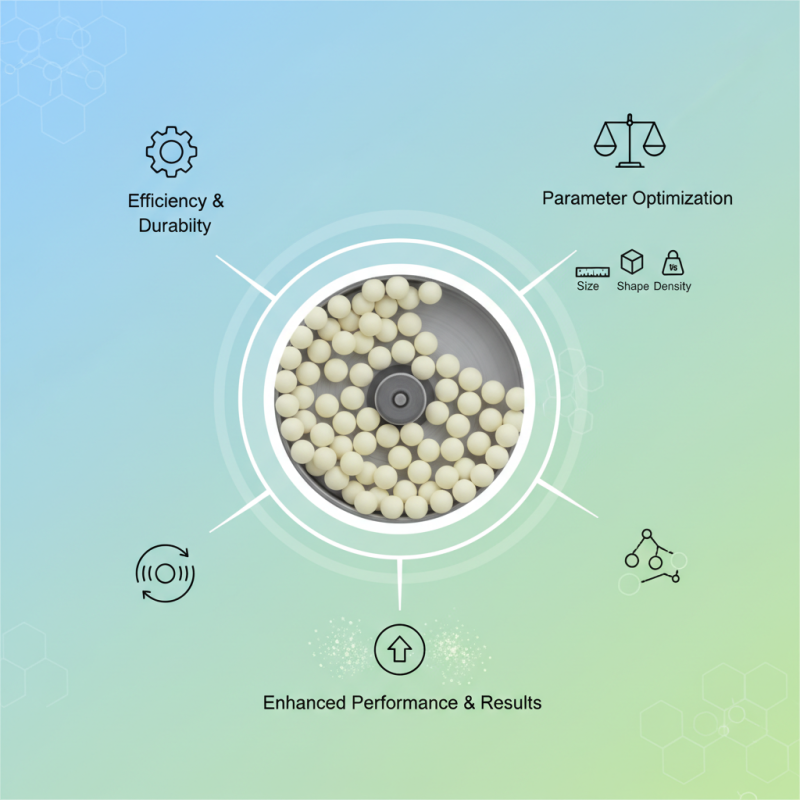
The intricate balance of parameters affects performance greatly. Factors like size, shape, and density play vital roles. Users must experiment to find the best fit for their processes. Small adjustments can yield unexpected improvements or challenges in grinding efficacy. Therefore, understanding and fine-tuning the use of Yttria Stabilized Zirconia Beads can lead to exceptional results in material processing.
Understanding Yttria Stabilized Zirconia Beads: Composition and Properties
Yttria stabilized zirconia (YSZ) beads are renowned for their unique composition and properties. They consist primarily of
zirconium oxide, enhanced with yttrium oxide.
This combination provides excellent toughness and wear resistance. According to a study published in the
"Journal of Materials Science," YSZ beads exhibit a fracture toughness of approximately
8 MPa.m0.5, making them ideal for grinding applications.
When considering YSZ beads for milling, one must take their density and size into account.
With a density of around 6.0 g/cm³, these beads can deliver optimal results in both wet and dry milling processes.
Studies show that using smaller beads can yield finer particle sizes.
The right selection can improve product quality and reduce processing times.
Tips: Always monitor bead wear during the process. Lower wear rates result in more efficient grinding.
Regularly calibrate your milling equipment to ensure consistent results.
Consider conducting small-scale tests to find the best bead size for your specific applications.
Experimentation is key to improvement.
Advantages of Yttria Stabilized Zirconia Beads in Grinding Applications
Yttria stabilized zirconia (YSZ) beads are increasingly popular in grinding applications. Their unique properties offer distinct advantages that enhance grinding efficiency. These beads have an exceptional hardness, reaching up to 1200 HV, making them suitable for grinding harder materials. The low wear rate of YSZ beads results in less contamination, which is crucial in many industries, including ceramics and pharmaceuticals.
Using YSZ beads can elevate grinding performance significantly. A recent study shows that materials ground with YSZ beads achieve particle sizes reduced by up to 50%. The spherical shape of these beads provides uniform distribution and minimizes the chance of agglomeration. Their density also ensures maximum energy transfer during the grinding process, enhancing overall productivity.
Tip: When selecting the right YSZ beads, consider factors such as bead size and grinding media. Smaller beads provide finer results, while larger beads may suit coarse grinding.
It's worth noting that YSZ beads, though effective, may have higher initial costs compared to other materials. However, the longevity and performance benefits often offset these expenses. It's essential to evaluate your specific grinding needs and costs effectively to identify the best fit for your operations.
Optimal Size and Shape of Yttria Stabilized Zirconia Beads for Efficiency
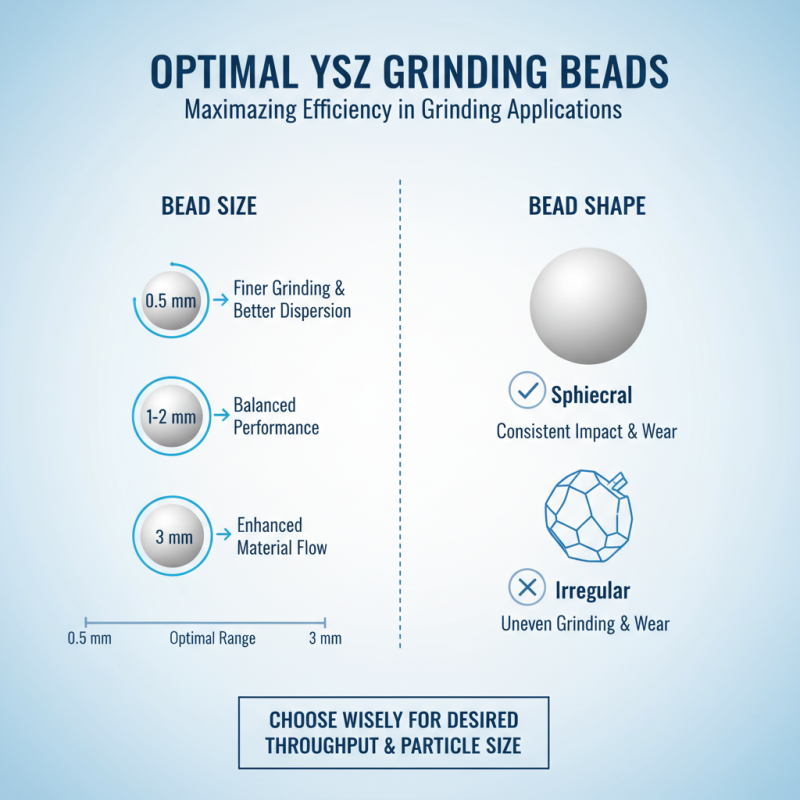
When it comes to maximizing efficiency in grinding applications, the size and shape of yttria-stabilized zirconia (YSZ) beads play a crucial role. According to industry reports, beads with a diameter between 0.5 mm and 3 mm are commonly preferred for optimal performance. Smaller beads tend to provide better dispersion and finer grinding results, while larger beads can enhance the flow of materials. This delicate balance makes choosing the right size essential for achieving the desired throughput and particle size.
Shape is another significant factor. Studies show that spherical beads typically yield better grinding efficiency than irregularly shaped ones. The uniformity of spheres allows for consistent contact with materials, resulting in more effective comminution. Reports indicate that using angular shapes may increase wear on equipment, ultimately leading to reduced lifespan and increased operational costs. Such reflections on bead shape highlight the complexities of grinding processes and the need for careful evaluation.
Notably, the selection of YSZ beads can also be impacted by specific material properties. When grinding harder materials, a higher density bead might be required to maintain grinding effectiveness. The choice is not merely scientific; it requires experience to determine the best fit for various applications. It's clear that understanding the interplay of size, shape, and material characteristics is vital for optimal grinding outcomes.
Best Practices for Using Yttria Stabilized Zirconia Beads in Grinding
Yttria stabilized zirconia beads are essential for achieving optimal grinding results. When using these beads, it's crucial to select the right size and density for your specific application. Smaller beads often provide finer grinding, while larger beads may enhance the efficiency of bulk materials. Experimenting with different combinations can lead to better outcomes.
Another important practice involves monitoring the grinding parameters. Keep an eye on the rotation speed and the duration of the grinding process. Adjusting these factors can significantly affect the quality of the ground material. Regularly check for wear and tear on the beads. This helps maintain grinding efficiency and ensures longer lifespan.
Cleaning the beads after use is often overlooked. Residual materials can affect future operations and degrade the beads faster. Rinse them thoroughly after grinding to maintain performance. Additionally, consider the environment in which the grinding occurs. Humidity and temperature can also impact results. These factors require careful attention for optimal performance.
Maintenance and Longevity of Yttria Stabilized Zirconia Beads in Processing
Yttria stabilized zirconia beads are widely used for grinding tasks. Their durability is essential for optimal performance. Proper maintenance not only extends their life but also enhances grinding efficiency. A common issue is the accumulation of material on the beads. Regular cleaning is necessary. Use a mild detergent solution. Rinse thoroughly to prevent chemical residues. This process decreases wear and guarantees consistent results.
Storage is another critical aspect. Beads should be kept dry and away from direct sunlight. Humidity can affect their performance, leading to premature wear. Inspect the beads regularly for any signs of damage or wear. Such examinations help identify issues early. If you notice pitting or chips, consider replacing the beads promptly.
In grinding operations, using the correct parameters is vital. Adjusting the speed and pressure can impact the lifespan of the beads. Sometimes, operators overlook this. It’s essential to conduct tests to find the right balance. Overloading can lead to excessive wear. A careful approach can enhance both performance and longevity. Regular maintenance and adjustments are key to maximizing effectiveness.
Impact of Yttria Stabilized Zirconia Beads on Grinding Efficiency
This bar chart illustrates the impact of reducing the size of Yttria Stabilized Zirconia beads on grinding efficiency. As the bead size decreases, the grinding efficiency increases, indicating optimal performance with smaller beads.