Pingxiang Baitian New Materials Co., Ltd

Leave Your Message

2026 Top Zirconia Ball Media Types for Global Buyers?

In 2026, global buyers will examine more than price when selecting Zirconia Ball Media. Milling efficiency, contamination control, bead durability, and supply consistency now shape purchasing decisions. A dense bead may shorten grinding time, yet it can also increase equipment stress. The “best” option depends on the material, mill design, and required particle size.

Dr. James S. Reed, a ceramic-processing specialist, once noted, “Performance begins with matching the media to the process, not choosing the hardest bead.” That principle remains practical. Yttria-stabilized zirconia often suits high-energy grinding because it combines high density with strong wear resistance. Ceria-stabilized zirconia can offer dependable toughness and cost balance. Alumina-toughened zirconia may appeal to buyers seeking lower material costs without abandoning ceramic performance. Smaller beads can improve fine dispersion, while larger beads may handle coarse feed more effectively.

Details matter. Check bead roundness, size tolerance, density, fracture resistance, and batch traceability. Ask for wear data under comparable operating conditions. Do not rely on a brochure alone. A claimed “long life” may mean little without test speed, slurry chemistry, and mill type. This is where buyers can misjudge.

There is no universal winner. A laboratory trial often reveals uncomfortable differences between suppliers. Some media perform well initially but lose efficiency after extended circulation. Others cost more but reduce replacement frequency. In 2026, the strongest buying strategy will combine technical evidence, transparent documentation, and realistic testing before committing to large-volume Zirconia Ball Media purchases.
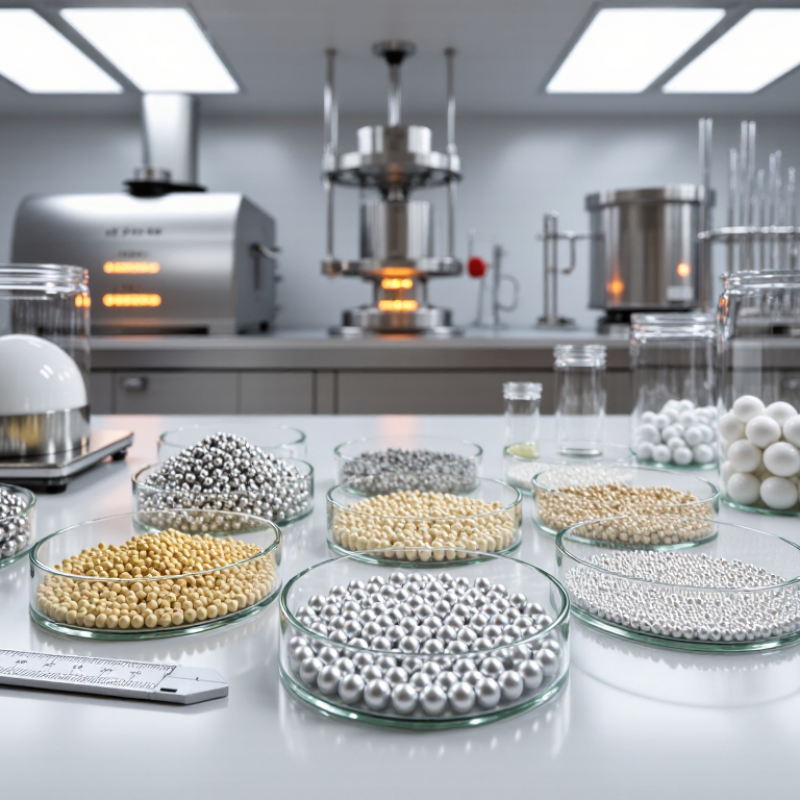
2026 Top Zirconia Ball Media Types for Global Buyers?

What Are Zirconia Ball Media and Why Do They Matter in 2026?

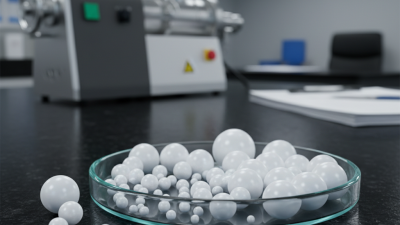
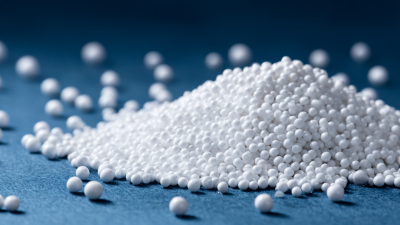
Zirconia ball media are dense grinding beads made from zirconium oxide, often stabilized with yttria or ceria. Some formulations combine zirconia with alumina to balance toughness and cost. Their high density creates strong impact energy inside bead mills. Their smooth surfaces also reduce material retention and cleaning difficulty.

Why do they matter in 2026?

Manufacturers need finer particles, lower contamination, and stable output from smaller equipment. Zirconia resists wear better than many conventional ceramic media. This matters when processing pigments, advanced ceramics, minerals, coatings, or electronic materials. A worn bead can add unwanted particles to the final product. That detail is easy to overlook.

Selection should match the mill, slurry viscosity, feed size, and target particle size.

Yttria-stabilized zirconia usually suits demanding dispersion and ultrafine grinding. Ceria-stabilized grades may offer a practical balance for less aggressive applications. Inspect bead roundness, density, fracture resistance, and batch traceability before purchase. Ask for test data, not only a catalogue value. Production trials often expose problems that specifications miss. A bead may perform well in water but behave differently in a viscous solvent. No selection guide is perfect. Cleaning methods, filling ratio, and separator design can change results significantly. Global buyers should also verify consistent dimensions, export documentation, and material compliance for their destination market.

Which Zirconia Ball Media Types Are Available to Global Buyers?

2026 Top Zirconia Ball Media Types for Global Buyers

Global buyers can choose among yttria-stabilized zirconia, ceria-stabilized zirconia, magnesia-stabilized zirconia, and alumina-toughened zirconia media. Yttria-stabilized beads remain popular for high-energy milling because their density often reaches 5.9–6.1 g/cm³. They support strong impact energy while limiting metal contamination.

Ceria-stabilized types offer high density and toughness, especially in demanding industrial grinding. Magnesia-stabilized grades may reduce purchasing costs, but performance can vary between suppliers. Alumina-toughened zirconia sits between conventional ceramic media and premium zirconia options.

The U.S. Geological Survey’s Mineral Commodity Summaries 2025 reported approximately 1.5 million metric tons of global zirconium mineral concentrate production in 2024. That figure describes raw zirconium supply, not finished grinding beads, but it shows the scale behind downstream zirconia materials.

A 2024 advanced ceramics market analysis also identifies electronics, chemicals, and medical processing as major demand sectors. Buyers should match bead diameter with slurry viscosity, mill speed, and target particle size. Common sizes range from 0.1 to 3 millimeters.

Small beads improve fine dispersion. Larger beads deliver stronger impact. Ask for density, crush strength, wear loss, and chemical resistance data.

A catalog can look precise. It is not a test. Independent wear trials remain important, especially when switching stabilizer systems or suppliers. Purity claims also need verification through batch certificates and laboratory analysis.

How Do Zirconia Ball Media Types Compare by Performance?

Yttria-stabilized zirconia, often called Y-TZP, delivers high density, hardness, and strong wear resistance. Its density is usually near 6.0 g/cm³. This helps produce intense impact in high-energy bead mills. It suits pigments, advanced ceramics, and difficult mineral slurries. However, excessive pressure can increase heat and raise operating costs.

Ceria-stabilized zirconia offers useful fracture toughness and stable performance during long milling cycles. It can tolerate demanding agitation conditions, especially when bead breakage is a concern. Its performance may differ with stabilizer content and manufacturing quality. Buyers should request density, hardness, crush strength, and wear-rate data rather than rely on product labels. Small beads can improve dispersion, while larger beads may handle coarser feed more effectively.

Alumina-toughened zirconia combines zirconia’s toughness with a lower material cost in many applications. It can provide a practical balance for medium-intensity milling. Its lower density may reduce impact energy compared with premium Y-TZP media. That difference matters in viscous slurries. Size distribution also matters. Uneven beads can create unstable flow and inconsistent particle reduction. I have seen specifications look excellent on paper, yet pilot tests reveal faster wear. A short trial using the actual slurry, speed, temperature, and separator is more reliable. No single type wins everywhere. Even a small change in viscosity can alter the result.

How to Select Zirconia Balls for Different Milling Applications?

2026 Top Zirconia Ball Media Types for Global Buyers?

How to Select Zirconia Balls for Different Milling Applications?

Choosing zirconia balls starts with the material, not the catalog label. Yttria-stabilized zirconia offers high density, strong wear resistance, and efficient energy transfer. It suits fine grinding of ceramics, pigments, minerals, and advanced materials. Ceria-stabilized zirconia can provide excellent toughness, especially where impact stress is significant. Zirconia-toughened alumina may reduce cost, but its lower density can require different milling conditions.

Match ball size to the target particle size. Smaller balls increase contact points and support finer dispersion. Larger balls help break coarse feed and improve circulation in viscous slurries. Check the mill chamber, agitator speed, slurry viscosity, and solid loading together. A 0.3 mm ball may perform well in a laboratory bead mill, while a 3 mm ball may be more practical for pre-grinding. Do not assume smaller is always better.

Tips: Confirm chemical compatibility before production. Measure wear after a timed trial, not by appearance alone. Inspect roundness and surface finish, because damaged media can increase contamination. Keep a simple record of feed size, temperature, speed, and power use. One detail is often missed: clean the chamber before changing materials.

A perfect selection is rare. In real testing, the best result may require mixed sizes, adjusted speed, or a longer residence time. Review the data after each trial, and accept that initial settings may be wrong. That is useful information.

What Should Global Buyers Check Before Placing an Order?

2026 Top Zirconia Ball Media Types for Global Buyers

Before placing an order, global buyers should match the zirconia ball type to the milling material. Yttria-stabilized zirconia offers high density, strong wear resistance, and efficient grinding. Ceria-stabilized zirconia may provide good toughness for selected wet-milling applications. Alumina-toughened zirconia can balance impact resistance and cost. The best choice depends on viscosity, feed hardness, mill speed, and contamination limits.

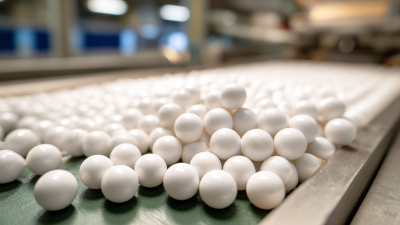
Ask for the zirconia composition, density range, diameter tolerance, and wear test method. Do not rely on “premium quality” as a technical specification. Request recent batch certificates, inspection records, and sample results from comparable materials. Check whether the balls are rolled, pressed, or shaped through another process. Manufacturing methods can affect roundness and internal consistency. A small sample run often reveals performance problems earlier than a large shipment.

Global purchasing also requires practical checks. Confirm packaging strength, moisture protection, pallet dimensions, documentation, and customs descriptions. Clarify minimum order quantities, replacement policies, lead times, and delivery terms in writing. Verify that the supplier can maintain the same size distribution across repeated batches. A polished certificate is useful, but it cannot replace a controlled plant trial. Some buyers, including experienced teams, overlook this step when schedules become tight. That mistake can create unexpected wear, product contamination, or higher energy use. Keep test data, photographs, and receiving records for future comparison.

2026 Top Zirconia Ball Media Types for Global Buyers? - What Should Global Buyers Check Before Placing an Order?
Media Type Typical Composition Typical Bulk Density
(g/cm³)
Typical Vickers Hardness
(HV)
Wear and Toughness Profile Typical Applications Recommended Size Range Checks Before Ordering
3Y-TZP High-Purity Zirconia
Best all-round choice
Zirconium oxide stabilized with approximately 3 mol% yttria; usually supplied as a high-purity ceramic media. Approximately 5.8–6.1 Approximately 1,200–1,500 Very low wear, high fracture toughness, and strong resistance to repeated impact. Suitable for demanding high-energy milling. Ceramic powders, electronic materials, pigments, advanced coatings, battery materials, and pharmaceutical formulations. Approximately 0.05–30 mm; smaller beads are normally selected for finer particle-size reduction. Confirm yttria content, ZrO₂ plus HfO₂ purity, density test method, bead roundness, internal defects, size tolerance, and contamination limits.
5Y-TZP Zirconia
Fine finishing
Zirconium oxide stabilized with approximately 5 mol% yttria, providing a higher cubic-phase content than 3Y-TZP. Approximately 5.6–5.9 Approximately 800–1,100 Lower hardness and fracture toughness than 3Y-TZP, but good surface finish and reduced risk of excessive impact damage in fine grinding. Fine polishing, surface finishing, low-to-moderate energy dispersion, and applications where optical or surface quality is important. Approximately 0.05–10 mm Verify that the lower hardness is suitable for the process, check phase composition, bead strength, size distribution, and expected wear rate.
Ce-TZP Ceria-Stabilized Zirconia
High toughness
Zirconium oxide stabilized commonly with approximately 10–12 mol% ceria. Approximately 6.0–6.2 Approximately 900–1,200 Very high fracture toughness and good impact resistance; generally less hard than 3Y-TZP and may have a higher wear rate in some abrasive systems. High-impact milling, tough or coarse feed materials, mineral processing, and processes where bead breakage is a major concern. Approximately 0.1–30 mm Check ceria content, toughness data, hardness, density, chemical compatibility, color transfer risk, and performance under the planned milling energy.
ATZ Alumina-Toughened Zirconia
Balanced ceramic option
A composite containing zirconia and alumina; the alumina-to-zirconia ratio varies significantly by product specification. Approximately 4.5–5.5 Approximately 1,300–1,800 High hardness and good wear resistance, with improved toughness compared with conventional alumina. Properties depend strongly on alumina content and microstructure. Abrasive powder processing, technical ceramics, mineral slurries, coatings, and applications requiring a balance of hardness and impact resistance. Approximately 0.1–20 mm Request the exact alumina percentage, zirconia stabilization system, density, hardness, fracture toughness, phase composition, and test standards.
Zirconia-Silicate Composite
Economical option
A composite ceramic media generally containing zirconium silicate with a zirconia-rich phase; the exact composition varies by grade. Approximately 3.8–4.2 Approximately 700–1,000 Lower cost and moderate wear resistance, but lower density, hardness, and impact durability than high-purity zirconia media. Paints, inks, general coatings, low-to-medium viscosity dispersions, and less aggressive grinding operations. Approximately 0.3–30 mm Confirm zirconia and silicate proportions, soluble impurities, bead wear, contamination level, density, roundness, and suitability for high-speed mills.
High-Strength Zirconia Microbeads
Nano and submicron processing
Usually fine-grained 3Y-TZP or a closely related high-purity zirconia formulation manufactured in microbead sizes. Approximately 5.8–6.1 Approximately 1,200–1,500 Designed for high surface area and efficient fine grinding; production quality, bead roundness, and size classification are especially important. Nanomaterial dispersion, battery slurries, pigments, inks, pharmaceutical suspensions, and submicron particle-size reduction. Approximately 0.03–0.30 mm Check particle-size distribution, minimum bead diameter, sieve or laser classification method, surface roughness, breakage rate, and cleaning procedure.
Note: The figures shown are typical industry ranges for comparison only. Actual values depend on formulation, sintering, bead size, measurement method, and production tolerance. Buyers should request a current technical data sheet, certificate of analysis, sample test results, packaging details, and applicable product-compliance documents before placing an order.