Pingxiang Baitian New Materials Co., Ltd

Leave Your Message

Top 10 Cerium Stabilized Zirconia Ball Suppliers Worldwide?

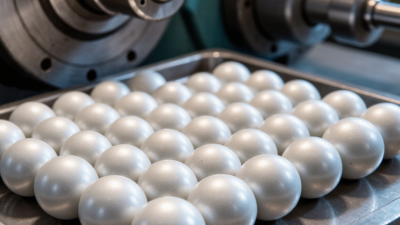
Selecting the right Cerium Stabilized Zirconia Ball supplier requires more than comparing catalogue prices. These grinding media combine zirconia’s high fracture resistance with ceria’s stabilizing effect, making them suitable for ceramic slurries, pigments, minerals, coatings, and advanced materials. Their performance depends on density, ceria content, bead size, surface finish, crush resistance, and manufacturing consistency.

Industry data supports the need for careful supplier evaluation. The U.S. Geological Survey’s Mineral Commodity Summaries identifies zirconium as an important industrial mineral used in ceramics, refractories, and other advanced applications. Grand View Research also reports continued growth in the global advanced ceramics market, driven by electronics, energy, medical devices, and industrial processing. However, most public reports do not isolate cerium-stabilized grinding balls. That limitation matters. Buyers must verify product-level evidence rather than rely on broad market forecasts.

Ronald C. Garvie and his colleagues famously described zirconia as “ceramic steel” in their influential 1975 Nature paper, highlighting its unusual strength and transformation behavior. For this supplier comparison, that phrase remains useful, but it is not enough. A reliable ranking should examine technical datasheets, batch certificates, ISO systems, wear-test methods, export experience, and application support. Suppliers with clear traceability deserve greater confidence. A polished website does not prove stable bead quality. Nor does the lowest quotation.

The following list compares ten worldwide suppliers through an engineering and purchasing lens. It considers practical evidence, while acknowledging that regional availability, shipping costs, and limited independent test data can still affect the final decision.
Top 10 Cerium Stabilized Zirconia Ball Suppliers Worldwide?

Cerium-Stabilized Zirconia Balls: Composition, Properties, and Applications

Cerium-stabilized zirconia balls combine zirconium oxide with cerium oxide, commonly between 10 and 20 mol% CeO2. Ceria delays phase transformation and improves resistance to cracking. Published reviews in Ceramics International report typical densities near 6.0–6.2 g/cm³, hardness around 1,200 HV, and fracture toughness near 8–10 MPa√m. These values support efficient particle-size reduction with lower contamination than many steel media.

Their applications include mineral processing, electronic ceramics, pigments, coatings, pharmaceuticals, and advanced composites. The USGS Mineral Commodity Summaries 2024 identifies zirconium mineral concentrates as an important global industrial feedstock. However, raw-material availability does not guarantee consistent ball quality. Milling performance also depends on bead diameter, surface finish, slurry chemistry, and machine energy. A common mistake is choosing only by density. That is incomplete. Real wear testing remains necessary.

Tips: Request composition, density, hardness, and wear-loss data from each supplier. Compare samples under identical speed, load, and milling time. Check for chipped edges under magnification. If the supplier provides only a generic certificate, ask for batch-level results. The ideal cerium content may differ between wet milling and dry milling. This point deserves more attention.
Top 10 Cerium Stabilized Zirconia Ball Suppliers Worldwide? - Cerium-Stabilized Zirconia Balls: Composition, Properties, and Applications

Anonymized technical and procurement comparison of global supplier profiles

Rank Anonymized Supplier Profile Primary Supply Region Typical CeO₂ Content ZrO₂ Matrix Typical Density Vickers Hardness Fracture Toughness Common Ball Sizes Typical Applications Key Purchasing Checkpoints
1 Supplier Profile A East Asia 10–12 mol% Ceria-stabilized ZrO₂, balance 5.95–6.10 g/cm³ 1,200–1,350 HV 8–10 MPa·m1/2 0.3–50 mm Media milling, dispersing, mineral processing Roundness, wear rate, contamination control
2 Supplier Profile B Central Europe 10–16 mol% Ceria-stabilized ZrO₂, balance 6.00–6.15 g/cm³ 1,250–1,400 HV 8–11 MPa·m1/2 0.1–30 mm High-purity powders, electronic ceramics, pigments Batch traceability, ISO quality system, purity
3 Supplier Profile C Japan and Northeast Asia 10–14 mol% Ceria-stabilized ZrO₂, balance 6.00–6.20 g/cm³ 1,300–1,450 HV 9–12 MPa·m1/2 0.05–20 mm Nanoparticle dispersion, laboratory milling, coatings Tight size tolerance, surface finish, low iron pickup
4 Supplier Profile D North America 10–16 mol% Ceria-stabilized ZrO₂, balance 5.90–6.10 g/cm³ 1,180–1,350 HV 8–10 MPa·m1/2 0.5–40 mm Paint, ink, ceramic slurry and chemical processing Domestic inventory, delivery time, technical support
5 Supplier Profile E South Asia 8–12 mol% Ceria-stabilized ZrO₂, balance 5.90–6.05 g/cm³ 1,150–1,300 HV 8–10 MPa·m1/2 1–50 mm Industrial ceramics, grinding and dispersion Cost per kilogram, moisture control, dimensional consistency
6 Supplier Profile F Southeast Asia 10–14 mol% Ceria-stabilized ZrO₂, balance 5.95–6.15 g/cm³ 1,200–1,350 HV 8–11 MPa·m1/2 0.3–30 mm Battery materials, technical ceramics, wet milling Chemical compatibility, lot-to-lot variation, packaging
7 Supplier Profile G Western Europe 10–16 mol% Ceria-stabilized ZrO₂, balance 6.00–6.20 g/cm³ 1,250–1,400 HV 9–12 MPa·m1/2 0.1–25 mm Pharmaceutical powders, food-grade processing, pigments Regulatory documentation, cleanability, material declarations
8 Supplier Profile H East-Central Europe 10–14 mol% Ceria-stabilized ZrO₂, balance 5.95–6.10 g/cm³ 1,200–1,350 HV 8–11 MPa·m1/2 0.5–40 mm Mineral fillers, glass, engineered stone and ceramics Bulk availability, wear testing, transport durability
9 Supplier Profile I Middle East and Mediterranean 8–12 mol% Ceria-stabilized ZrO₂, balance 5.90–6.05 g/cm³ 1,150–1,300 HV 8–10 MPa·m1/2 1–50 mm Cement additives, coatings, industrial mineral grinding Heat resistance, abrasion rate, export documentation
10 Supplier Profile J Global Distributor Network 10–16 mol% Ceria-stabilized ZrO₂, balance 5.95–6.15 g/cm³ 1,200–1,400 HV 8–12 MPa·m1/2 0.3–50 mm General-purpose milling and replacement media Stock location, original test data, product consistency

Technical Notes

  • Ceria-stabilized zirconia balls generally contain zirconium dioxide as the matrix and cerium oxide as the stabilizing phase; exact composition varies by grade and manufacturer.
  • Typical density, hardness and fracture-toughness values are indicative ranges for commercially available ceria-stabilized zirconia grades and should be confirmed using the supplier’s certificate of analysis.
  • Actual milling performance depends on ball diameter, slurry viscosity, mill design, filling ratio, rotational speed, feed material and operating temperature.
  • The profiles are intentionally anonymized; the ranking is a technical comparison format rather than an independently audited market ranking.

Criteria for Evaluating Worldwide Zirconia Ball Suppliers

Evaluating worldwide cerium stabilized zirconia ball suppliers requires more than comparing prices. Start with material evidence. Ask for a recent certificate showing zirconia purity, ceria content, density, hardness, and phase stability. The data should match the delivered lot. Request samples in the exact size used in your mill. Small diameter changes can affect grinding efficiency. A reliable supplier explains manufacturing tolerances clearly. Vague claims are warning signs. Very low prices deserve careful questioning.

Production controls reveal practical competence. Check whether the supplier monitors bead shaping, sintering temperature, surface finish, and internal defects. Independent test reports add credibility, but test methods must be stated. Traceable batch numbers matter when wear changes unexpectedly. I would also inspect packaging, moisture protection, and shipping labels before approving a shipment. These details seem ordinary. They prevent expensive surprises. A technical contact should answer process questions without hiding behind sales language.

Global service requires more than export experience. Evaluate lead times, replacement policies, documentation, and communication across time zones. Ask how the supplier handles cracked beads, mixed sizes, or a delayed batch. A written response is useful evidence. It shows accountability. Certifications can support trust, yet certificates alone cannot prove consistent performance. Pilot testing remains essential. Measure wear loss, product contamination, and mill energy under your own conditions. My checklist would include a review after three deliveries, because one successful sample may be luck. That limitation deserves attention.

Profiles of the Top 10 Cerium-Stabilized Zirconia Ball Suppliers

Supplier One focuses on high-purity cerium-stabilized zirconia balls for laboratory grinding. Its product sheets usually show density, hardness, and size tolerance. Supplier Two serves ceramic manufacturers with large production batches. Buyers should inspect batch consistency, not only the quoted price. Supplier Three specializes in small milling media, including balls below one millimeter. These sizes demand careful screening and accurate particle distribution data.

Supplier Four supplies wear-resistant media for mineral and pigment processing. Its technical team typically recommends ball sizes according to slurry viscosity and mill speed. Supplier Five offers custom packaging for research facilities and pilot plants. Traceability documents can make repeat purchasing easier. Supplier Six combines zirconia production with application testing. This is useful when users need advice on contamination control. Still, performance claims require independent verification.

Supplier Seven emphasizes dense sintered balls for demanding grinding cycles. Ask for measured density rather than a general “high density” description. Supplier Eight supports regional distributors with standard sizes and faster delivery. Supplier Nine provides customized grades for electronic ceramics and advanced materials. Its quality records should include sampling methods and test conditions. Supplier Ten targets precision applications where surface finish matters. Small defects can affect mill efficiency. I have found that supplier comparisons often miss shipping damage, replacement policy, and storage guidance. Those details seem minor, but they can change operating costs. A stronger evaluation combines factory experience, test evidence, responsive communication, and realistic application advice.

Top 10 Cerium-Stabilized Zirconia Ball Suppliers Worldwide

This chart presents representative technical benchmarks commonly associated with cerium-stabilized zirconia balls. It is intended to support supplier evaluation by focusing on material performance rather than displaying company or brand data.

Typical reference values include approximately 6.0 g/cm³ density, 8.5 Mohs hardness, 8 MPa·√m fracture toughness, and 1,200 MPa flexural strength. Exact specifications vary by ball size, manufacturing process, purity, and supplier datasheet.

Comparison of Product Quality, Certifications, Capacity, and Service

Top 10 Cerium Stabilized Zirconia Ball Suppliers Worldwide

Comparing the top ten suppliers requires more than checking price lists. Product quality begins with stable cerium distribution, consistent density, and accurate ball sizing. Ask for test data covering wear rate, crushing strength, roundness, and surface finish. A clean, uniform ball should produce fewer contaminants during ceramic, coating, or mineral grinding. Request a recent certificate of analysis for each production batch. Small details matter.

Certifications strengthen supplier credibility, but they do not replace technical evidence. ISO 9001 supports process control, while ISO 14001 indicates environmental management. Depending on the market, material declarations and restricted-substance compliance documents may also be important. Check whether certificates match the actual factory and product grade. That point is often missed. Independent laboratory testing can reveal differences hidden by attractive brochures.

Capacity affects delivery reliability, especially for continuous milling lines. Compare monthly output, kiln capacity, stock levels, and normal lead times. A supplier claiming high capacity may still struggle during maintenance or seasonal demand. Service quality deserves equal attention. Strong suppliers provide samples, loading recommendations, packaging suited to long transport, and responsive technical support. Ask how quickly they handle cracked media, inconsistent sizes, or delayed shipments. My practical view is simple: a short pilot trial is more persuasive than a perfect sales presentation. Supplier comparisons should record both successful results and unresolved weaknesses.

How to Select and Verify a Reliable Global Supplier

Top 10 Cerium Stabilized Zirconia Ball Suppliers Worldwide?

A top-ten list is only a starting point. Supplier reliability requires documented, repeatable evidence. The U.S. Geological Survey’s Mineral Commodity Summaries 2024 reported roughly 1.4 million metric tons of global zirconium mineral concentrate production in 2023. However, raw-material availability does not guarantee consistent ceramic beads. Ask each supplier for recent batch records, not only promotional samples.

Request the ceria content, zirconia purity, true density, hardness, crush strength, and size distribution. For grinding applications, inspect wear loss and contamination after a controlled trial. A proper certificate of analysis should identify the batch number, testing method, laboratory, and production date. Independent testing is useful when values appear unusually perfect. They often are. Also verify whether the supplier controls powder preparation, forming, sintering, sorting, and packaging.

ISO 9001 certification can support process confidence, but it cannot prove bead performance. The ISO Survey 2022 recorded more than 1.2 million ISO 9001 certificates worldwide, making certification common rather than decisive. Check certificate validity through the issuing body. Review calibration records and at least three comparable export references. Confirm packaging details, moisture protection, replacement policy, and response times for nonconforming batches. A small pilot order should precede a full contract. Measure particle size and wear again after delivery. Supplier websites are useful, but they are not evidence. A reliable decision combines laboratory results, traceability, transparent communication, and observed production consistency.