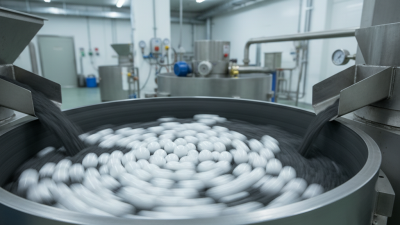
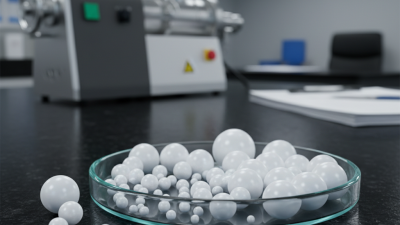
Choosing the right Yttria Stabilized Zirconia Beads manufacturer requires more than comparing product prices. These grinding media influence particle size, milling efficiency, equipment wear, and final product purity. A dependable supplier should demonstrate consistent bead density, controlled yttria content, smooth surfaces, and reliable roundness. Small differences can become visible in a production line.
This guide examines ten leading manufacturers and the qualities that distinguish them. The evaluation considers manufacturing experience, material expertise, quality-control systems, and technical support. Relevant evidence may include ISO certifications, inspection reports, laboratory data, and traceable batch records. Practical details also matter. Can the supplier provide different bead sizes? Does it explain recommended filling ratios and operating speeds? Are replacement batches consistent?
The word “best” is conditional. A bead that performs well in ceramic grinding may not suit pigment dispersion or advanced battery materials. Application requirements change the decision. Cost alone can mislead. A cheaper product may create faster wear, contamination, or unplanned downtime. Conversely, premium beads are not automatically superior.
Real-world testing remains essential. Request samples when possible. Compare wear rates under matching conditions. Check the supplier’s response before signing a large order. Fast answers are useful, but clear technical answers matter more. Some manufacturers publish limited information, which deserves careful review. This ranking aims to support informed comparison, not replace independent validation. Reliable purchasing decisions come from documented performance, transparent communication, and results observed in your own process.
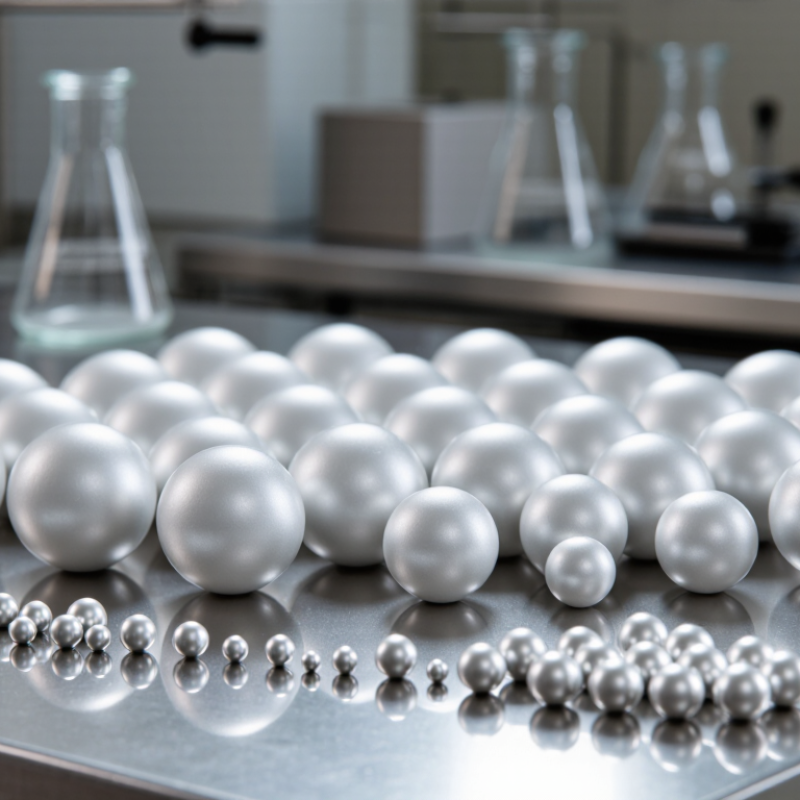
Yttria stabilized zirconia beads are dense grinding media made from zirconium dioxide and a small percentage of yttrium oxide. Yttria helps stabilize the zirconia crystal structure during heating and cooling. This prevents major cracking and improves mechanical strength.
These beads have a smooth surface, high hardness, and excellent wear resistance. Their density transfers strong impact energy during wet or dry milling. They are commonly used for dispersing pigments, ceramics, minerals, coatings, and advanced battery materials. A well-made bead should have consistent size, low porosity, and a carefully controlled yttria content. Small differences matter. They can change grinding efficiency, contamination levels, and service life. In practical milling work, bead performance is never determined by hardness alone. Equipment speed, slurry viscosity, bead size, and filling ratio also affect results. No bead is perfect, and selecting one only by price can create avoidable wear.
Tips: Match bead diameter with the target particle size and mill design. Inspect the beads for chips, irregular shapes, and excessive dust before use. Start with a small trial batch. Check temperature, energy use, and final particle distribution. If the results look inconsistent, review the process instead of blaming the media immediately.

Choosing among yttria stabilized zirconia beads manufacturers requires more than comparing prices. The bead’s chemistry, density, hardness, and wear resistance directly affect milling efficiency. Ask for the yttria percentage and phase composition. These details influence fracture behavior and grinding stability. A reliable manufacturer should provide batch-specific certificates, not generic product sheets. Small differences matter.
Check production control closely. Beads should show consistent diameter, smooth surfaces, and limited internal pores. Request test data for density, crushing strength, abrasion loss, and size distribution. Independent laboratory verification adds credibility. Samples are useful, but one sample cannot prove long-term consistency. That limitation deserves attention.
Manufacturing experience should appear in practical support. A technically capable supplier can recommend bead sizes for your mill, slurry viscosity, and target particle size. Clear guidance on cleaning, storage, and replacement intervals also reveals process knowledge. Ask how rejected batches are handled and whether production records are traceable. Fast replies are helpful, but detailed answers are more important. Delivery reliability, packaging quality, and export documentation should also be reviewed. In my view, the best evaluation combines laboratory evidence with a controlled trial. A polished certificate is not enough. Real performance may still vary with equipment, operators, and material load. Good manufacturers acknowledge this uncertainty instead of promising perfect results.
| No. | Evaluation Dimension | Recommended Technical Benchmark | Why It Matters | Evidence to Request from a Manufacturer |
|---|---|---|---|---|
| 1 | Yttria Stabilization Level | Approximately 8 mol% Y2O3 for common fully stabilized zirconia bead applications. | The yttria level affects phase stability, fracture resistance, hardness, and grinding performance. | Batch-specific chemical analysis, specification sheet, and allowable composition tolerances. |
| 2 | Zirconia Purity | High-purity zirconia formulation with controlled hafnium, silica, alumina, iron, and other trace impurities. | Lower impurity levels help reduce product contamination and maintain consistent slurry or powder quality. | Certificate of analysis showing ZrO2, Y2O3, HfO2, and trace-element results. |
| 3 | Bulk Density | Typically about 3.5–3.8 g/cm³ for dense yttria-stabilized zirconia beads, depending on grade and measurement method. | Higher density generally improves impact energy and milling efficiency in high-viscosity systems. | Test method, measured density range, lot records, and explanation of apparent versus true density. |
| 4 | Hardness and Fracture Resistance | High Vickers hardness and sufficient fracture toughness for the intended milling intensity; values must be compared using the same test standard. | A suitable balance reduces bead breakage while preserving effective particle-size reduction. | Hardness and fracture-toughness data, test standards, sample preparation details, and failure-rate records. |
| 5 | Bead Size Range | Common commercial sizes range from approximately 0.03 mm to 3.0 mm, with tighter ranges available for specialized mills. | The correct diameter influences stress intensity, flowability, separator compatibility, and final particle size. | Available size grades, sieve or laser-diffraction results, tolerance limits, and size-distribution charts. |
| 6 | Sphericity and Surface Finish | Uniformly rounded beads with a smooth, low-defect surface and minimal sharp edges or satellites. | Good sphericity supports stable flow, lower friction, reduced mill wear, and more predictable energy transfer. | Microscope images, sphericity criteria, surface-defect inspection procedure, and sample approval records. |
| 7 | Wear Rate and Contamination Control | Documented low-wear performance under a defined test formulation, mill type, speed, duration, and bead loading. | Wear rate affects operating cost, product purity, maintenance intervals, and downstream filtration. | Comparative wear-test report, test conditions, worn-bead inspection, and elemental contamination analysis. |
| 8 | Manufacturing and Sintering Consistency | Controlled granulation, drying, sintering, polishing, and screening processes with stable lot-to-lot results. | Process consistency is essential for predictable mill power, throughput, and bead service life. | Process flow, in-process controls, statistical quality data, lot traceability, and nonconformance procedures. |
| 9 | Quality Management and Testing | A documented quality system supported by calibrated testing for chemistry, density, size, strength, and wear. | Independent, repeatable testing improves purchasing decisions and reduces quality-related production interruptions. | Quality certificates, calibration records, inspection plans, audit reports, and representative batch documentation. |
| 10 | Technical Support and Supply Capability | Application guidance, sample testing, stable minimum order quantities, export packaging, and documented delivery lead times. | Technical support and reliable supply reduce qualification time and help maintain continuous production. | Sample policy, mill-application support, packaging specification, lead-time history, and replacement or claims policy. |
Choosing the best yttria stabilized zirconia bead manufacturer requires more than comparing catalog prices. These profiles examine ten manufacturers through material consistency, production control, and application support. One focuses on high-density beads for ceramic dispersion. Another specializes in narrow particle-size ranges, helping reduce milling time. A third serves laboratory users with small trial quantities. Useful detail matters.
A fourth manufacturer emphasizes automated bead shaping and polished surfaces. This can reduce wear on milling equipment. A fifth provides beads designed for electronic material processing, where contamination control is critical.
A sixth supports coatings and pigments with several size options. A seventh highlights batch traceability, including furnace records and inspection data. That evidence builds confidence.
An eighth offers technical guidance for bead loading, speed, and separator settings. Practical support often reveals real experience.
The ninth profile represents a producer focused on larger industrial batches and stable delivery schedules. The tenth combines custom sizing with testing for density, crush strength, and wear resistance. These differences matter because one bead grade cannot serve every mill or slurry. Experienced buyers should request samples, certificates, and wear data under comparable conditions. Marketing language alone is weak evidence. I would also check packaging quality, moisture protection, and response time from technical staff. No manufacturer is perfect, and published values may change between batches. Some suppliers explain limitations openly; others provide impressive numbers without test conditions. That gap deserves attention before approval.
Selecting among the 10 best yttria stabilized zirconia beads manufacturers requires more than checking price or catalog claims. Experienced buyers examine yttria content, bead density, roundness, and internal structure. These factors influence grinding efficiency, wear resistance, and contamination control. A reliable manufacturer should provide batch certificates, particle-size data, and clear quality-control procedures. Traceability matters when production results must remain consistent.
Performance becomes clearer during practical testing. In high-energy mills, dense beads can improve dispersion and reduce processing time. Smaller beads often suit pigments, coatings, inks, and advanced ceramic slurries. Larger beads may perform better with viscous materials or coarse feedstock. Operators should monitor temperature, mill speed, bead wear, and final particle size. Small details matter.
For pharmaceutical or electronic materials, low contamination is critical. For mineral processing, durability and cost per processed ton may carry more weight. Lab tests can look excellent, yet full-scale results may change because of slurry chemistry or equipment design. That is why a controlled trial remains essential. A perfect ranking is difficult. Some comparisons also rely too heavily on short-term wear data. Buyers should review long-term performance, replacement frequency, technical support, and delivery reliability before choosing a supplier.
Selecting the right yttria stabilized zirconia beads manufacturer requires more than comparing prices. Start with your milling conditions, including material hardness, slurry viscosity, bead size, and target particle size. A capable manufacturer should explain how yttria content, density, and bead structure affect grinding performance. Ask for test data, not vague claims.
Request samples from the same production grade you may purchase. Check roundness, surface smoothness, crush strength, wear rate, and contamination after a controlled milling trial. Small details matter. A reliable supplier should provide batch numbers, quality records, inspection methods, and clear tolerance ranges. Certificates are useful, but they should match the actual shipment.
I once focused too heavily on unit price and overlooked delivery consistency. That mistake delayed production. Evaluate manufacturing capacity, packaging quality, technical support, and response time before signing an agreement. Ask how rejected batches are handled and whether replacement procedures are documented. The manufacturer should discuss your process openly, even when your requirements are incomplete. Be cautious of perfect promises. Real performance can change with equipment settings, feed materials, and cleaning routines. A short factory audit or video inspection can reveal storage conditions, labeling practices, and production discipline. Test before committing to volume.
Bead diameter should match the material, viscosity, milling chamber, and required particle size. The ranges below represent commonly used industry selection ranges for yttria-stabilized zirconia beads and are provided as a manufacturer-neutral reference. When comparing suppliers, also verify zirconia content, density, roundness, wear resistance, batch consistency, and quality documentation.