2026 Best Ceria Zirconia Ball for Global Buyers?
Choosing the 2026 Best Ceria Zirconia Ball requires more than comparing price or advertised purity. Global buyers need evidence from production conditions, test methods, and application results. Ceria Zirconia Ball performance depends on density, fracture toughness, surface finish, bead size, and contamination control. Small differences can change milling efficiency, product color, and equipment wear.
Industry data supports a careful approach. The USGS Mineral Commodity Summaries 2025 describes zirconium minerals as strategically important inputs for ceramics, refractories, and advanced engineering products. Grand View Research’s advanced ceramics market analysis also identifies rising demand for wear-resistant materials in chemical processing, electronics, and energy applications. These reports show market direction, but they do not select one universal bead for every mill.
Application fit matters most. A laboratory disperser may require 0.1–0.3 mm beads, while industrial grinding can use larger media. Buyers should request batch certificates, true density results, dimensional tolerances, and independent wear testing. ISO and ASTM methods can improve comparison, although not every supplier reports them consistently. That gap deserves attention.
A reliable supplier should explain raw material origin, sintering controls, polishing quality, and quality-inspection frequency. Ask for real test data. Do not rely on a glossy brochure.
There is no perfect Ceria Zirconia Ball. A cheaper bead may increase replacement costs. A denser bead may overload older equipment. Careful trials remain essential, especially when scaling from laboratory vessels to continuous production lines.
What Are Ceria-Stabilized Zirconia Balls?
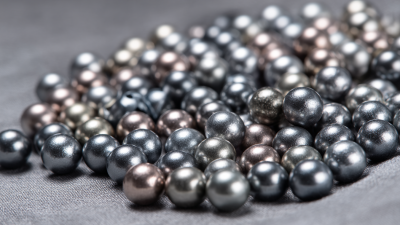
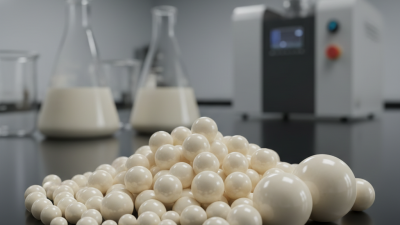
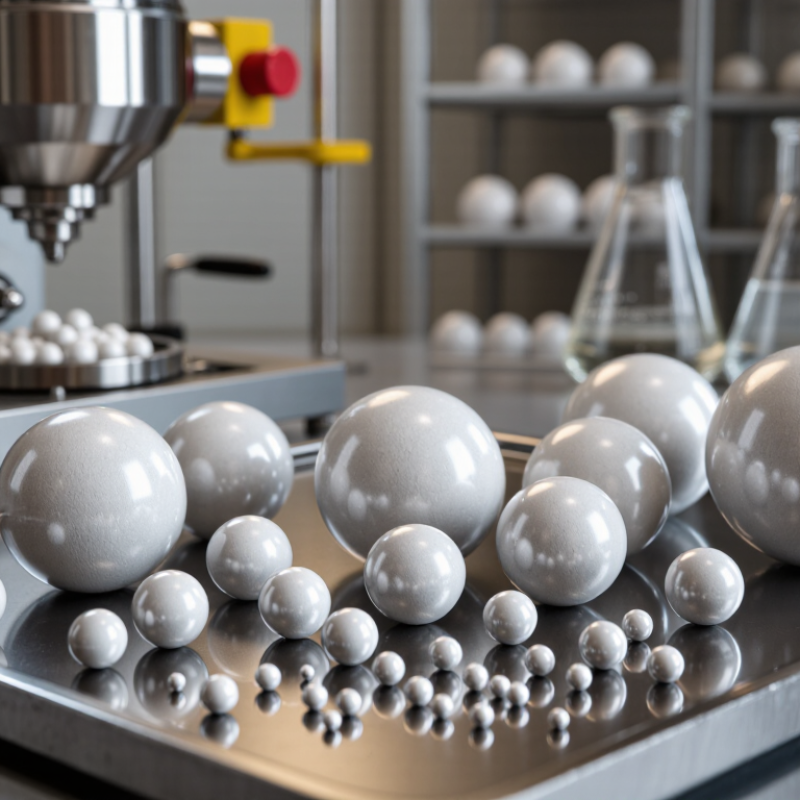
Ceria-stabilized zirconia balls are ceramic grinding media made from zirconium dioxide and cerium oxide. Ceria helps stabilize the zirconia crystal structure during heating and cooling. This structure gives the balls strong fracture resistance and reliable performance under repeated impact.
They are dense and smooth. These qualities support efficient particle size reduction, dispersion, and mixing in many industrial mills. Their low contamination potential is useful when processing sensitive powders, pigments, coatings, ceramics, and advanced materials. Compared with some harder ceramic media, ceria-stabilized zirconia may offer better resistance to chipping during demanding operations. However, hardness, toughness, density, and cost must be balanced for each application.
Selection should begin with the material being processed. Hard minerals may require a different grade than delicate chemical powders. Ball diameter also matters: smaller balls create more contact points, while larger balls can deliver stronger impact. Check density, diameter tolerance, surface finish, crush strength, and chemical compatibility on the technical datasheet. Ask for independent test data when possible.
A practical trial is essential. Use the same mill, speed, filling ratio, and processing time before comparing results. Inspect the slurry for unexpected contamination and check worn balls after operation. No ceramic media is perfect. Even a well-made ball can perform poorly when the size or milling conditions are mismatched. Temperature changes, excessive pressure, or an unsuitable solvent may also reduce service life.
2026 Best Ceria Zirconia Ball for Global Buyers
Ceria-stabilized zirconia balls are high-density ceramic grinding media made from zirconium dioxide stabilized with approximately 10–12 wt% ceria. Their combination of hardness, toughness, and low contamination makes them suitable for fine and ultra-fine grinding.
How to read the chart: Ceria-stabilized zirconia typically combines a density around 6.0–6.2 g/cm³ with high hardness and fracture toughness. Actual values depend on powder composition, sintering conditions, ball diameter, and quality specifications.
Key Properties and Performance Advantages
Ceria-stabilized zirconia balls are valued for demanding milling and dispersion work. Their main advantage is a strong balance between toughness, wear resistance, and chemical stability. Typical material data report densities near 6.2 g/cm³, while hardness commonly reaches about 1,200 HV. These figures support efficient impact energy transfer in high-speed mills. The result can be finer particles and lower contamination than many alumina alternatives.
A 2023 review in the Journal of the European Ceramic Society reports fracture-toughness values commonly around 8–10 MPa·m½ for ceria-stabilized zirconia ceramics. This toughness helps reduce chipping under repeated impact. It matters when a mill runs continuously with heavy media loading. Industry testing also often shows very low wear rates, sometimes below 0.01% by weight under controlled laboratory conditions. Real production can differ. Slurry chemistry, ball size, speed, and loading change the outcome.
The U.S. Geological Survey’s 2024 Mineral Commodity Summaries recorded roughly 1.5 million metric tons of global zirconium mineral concentrate production in 2023. This supports a broad industrial raw-material base, but it does not guarantee equal ball quality. Buyers should request density, hardness, roundness, and wear-test records. Check batch consistency. A polished surface is useful, but it is not proof of superior performance. In practice, selecting one diameter for every milling stage may be convenient, yet it can waste energy and increase processing time.
Major Industrial Applications and Operating Conditions
2026 Best Ceria Zirconia Ball for Global Buyers?
Major Industrial Applications and Operating Conditions
Ceria zirconia balls suit high-energy grinding where contamination control matters. Their typical density reaches about 6.0 g/cm³, with hardness near 8.5 Mohs. These values support efficient particle size reduction in pigment, ceramic, mineral, battery-material, and advanced coating production.
In stirred mills, operators commonly use smaller beads for submicron dispersion. Larger beads can handle tougher feed and higher impact loads. A 2024 MarketsandMarkets analysis identifies ceramics, chemicals, and electronics as important growth areas for advanced ceramic media. In practice, slurry viscosity, bead filling rate, and shaft speed matter more than catalog density alone.
Temperature deserves attention. Many systems operate around 60–120°C, while specialized processes may run higher. Cooling remains necessary when viscosity rises or organic solvents create heat. A 2025 U.S. Geological Survey report confirms zirconium’s continuing role in ceramics, refractories, and chemical applications, but it does not replace application testing.
Do not overtrust laboratory results.
Operators should inspect bead wear, separator gaps, and mill vibration weekly. Excessive pressure can cause chipping, even with strong media. Acidic or alkaline slurries also require compatibility checks. A pilot trial using the actual formulation is safer than selecting beads from density alone. Some buyers overlook this step. That mistake can increase contamination, energy use, and maintenance costs.
Global Buying, Quality Standards, and Supplier Evaluation
2026 Best Ceria Zirconia Ball for Global Buyers?
Global buyers should judge ceria zirconia balls by verified performance, not attractive catalog claims. Check zirconium oxide content, ceria stabilization, density, roundness, surface finish, and crushing strength. These details affect grinding efficiency, contamination control, and service life. Ask for recent batch reports, not only standard templates. A reliable supplier should provide traceable lot numbers, inspection records, and consistent packaging. Small details matter. A scratched inner bag can introduce dust before production starts.
Supplier evaluation should include samples, technical communication, and realistic delivery terms. Test the balls in your actual mill, using the same slurry, speed, and loading ratio. Compare wear loss after a fixed operating period. Request clear information about quality systems, inspection methods, export documents, and material safety data. Certificates can support trust, but they cannot replace physical testing. A perfect document does not guarantee a perfect batch. That is worth remembering.
Tips: Start with a small trial order. Measure size distribution, density, and wear rate. Confirm tolerance limits in writing. Review how rejected products are handled. Check whether the supplier can maintain the same formulation across repeated batches. Do not select the lowest quote too quickly; freight damage, inconsistent sizing, and delayed replacement can cost more. I would also leave room for improvement, because early test results may not predict every production condition.