


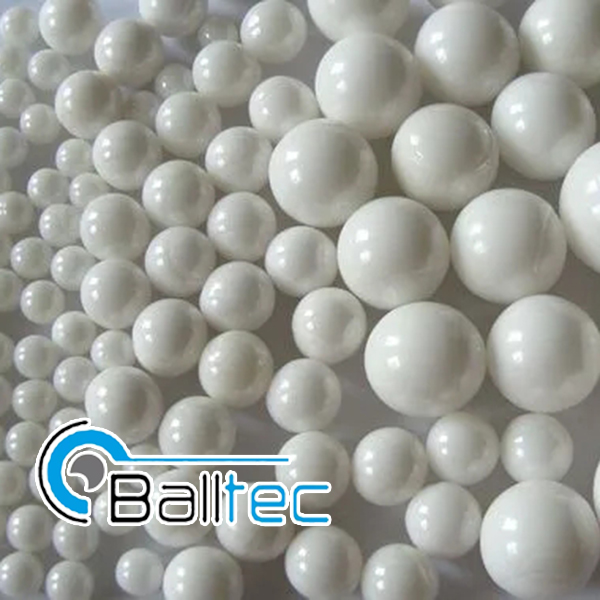
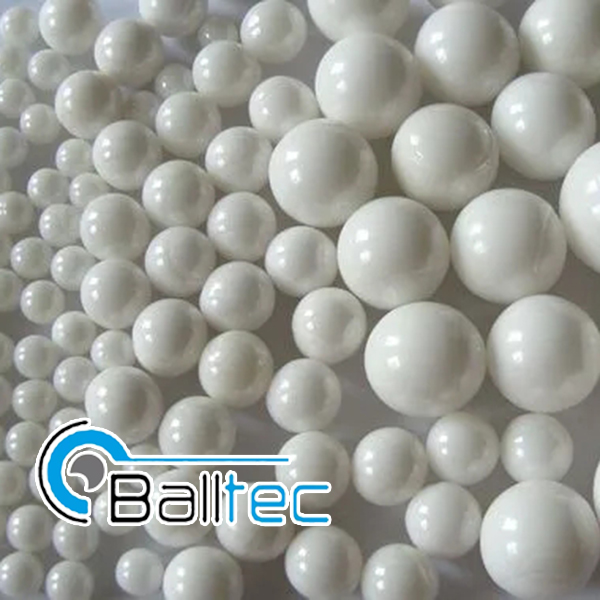
ZrO2 Grinding Ball for Reliable Industrial Ball Milling Operations
ZrO2 grinding balls, or zirconia grinding balls, are high-reliability abrasive media specially developed for industrial ball milling operations, delivering stable and efficient performance in various harsh processing environments. Crafted from high-purity zirconium oxide with yttrium oxide stabilization and high-temperature sintering technology, these grinding balls feature superior mechanical strength, wear resistance, and chemical inertness. They are designed to meet the rigorous requirements of industrial ball milling, ensuring consistent grinding efficiency, minimal material contamination, and long service life, thus reducing operational costs and improving production stability for enterprises.
Product Specifications
|
Parameter |
Value |
|
Material Composition |
ZrO2 ≥95% (Y2O3 8% stabilized) |
|
Density |
5.8-6.0 g/cm³ |
|
Rockwell Hardness (HRC) |
≥88 |
|
Wear Loss |
≤30 ppm/h |
|
Operating Temperature Range |
-20-250℃ |
|
Ball Diameter |
1.0-20.0 mm |
Core Advantages for Industrial Ball Milling
ZrO2 grinding balls excel in industrial ball milling with remarkable advantages that ensure reliability and efficiency. Their high density provides strong impact force and grinding kinetic energy, accelerating the milling process and improving material fineness uniformity, which is essential for large-scale industrial production. The ultra-low wear loss (≤30 ppm/h) and high hardness minimize bead consumption and avoid contamination of the milled materials, which is crucial for high-purity product manufacturing. Additionally, their excellent chemical stability ensures resistance to acid, alkali, and organic solvents, making them adaptable to diverse industrial milling scenarios without performance degradation.
Application Fields in Industrial Ball Milling
These ZrO2 grinding balls are widely used in reliable industrial ball milling operations across multiple industries. In the mineral processing industry, they are applied in ball mills for grinding ores (such as gold, copper, and iron ores) to liberate valuable minerals and improve beneficiation efficiency. In the ceramic and refractory industry, they mill ceramic raw materials and refractory powders to achieve uniform particle size distribution, enhancing product strength and performance. They also serve the chemical and new material industries, facilitating the milling of catalysts, pigments, and composite materials, ensuring stable and reliable production processes.
Frequently Asked Questions (FAQs)
Q1: What is the service life of these ZrO2 grinding balls in continuous industrial ball milling? A1: Under normal industrial operating conditions, the service life can reach 3000-5000 hours, which is 3-5 times longer than ordinary alumina grinding balls, significantly reducing replacement frequency. Q2: Can these grinding balls be used in wet and dry ball milling operations? A2: Yes, they are suitable for both wet and dry ball milling, maintaining stable performance in different medium environments, including water-based and oil-based milling systems. Q3: What diameter of grinding ball is recommended for large-scale industrial ball mills? A3: For large industrial ball mills (capacity >500L), we recommend 5.0-20.0 mm diameter balls to balance grinding efficiency and energy consumption.