
Pingxiang Baitian New Materials Co., Ltd
Leave Your Message
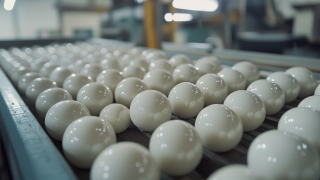
Ceramic Milling Media

Top Quality Ceramic Milling Media from Leading Chinese Factories for Reliable Performance

Need high-quality Ceramic Milling Media? Our products, sourced from a reputable manufacturer in China, deliver outstanding durability and efficiency for diverse milling applications. At Pingxiang Baitian (Ball-tec) New Materials Co., Ltd., we are a leading exporter committed to meeting the specific requirements of B2B customers. Our Ceramic Milling Media ensures exceptional grinding performance, enabling precise results while reducing wear on your equipment. With a broad selection of sizes and compositions, there’s a perfect solution for your milling processes. We prioritize quality and reliability, subjecting our products to rigorous performance testing. Partner with us for your Ceramic Milling Media needs and experience the advantage of collaborating with a trusted manufacturer focused on fulfilling your expectations. Enhance your production with us!

Hot Selling Product

Practical Methods To Ceramic Milling Media Your End-to-End Solution Factory

When it comes to optimizing your production process, the choice of ceramic milling media is critical. These materials play a fundamental role in industries such as bio-dentistry, solid fuel cell production, and advanced additive manufacturing. Selecting the right milling media can lead to enhanced efficiency, improved product quality, and significant cost savings in the long run. This article discusses practical methods to incorporate high-performance ceramic milling media into your manufacturing processes, providing an end-to-end solution for your factory. One effective approach is to focus on the composition of your milling media. High-purity zirconia and alumina are recognized for their superior hardness and wear resistance, which can significantly reduce contamination during grinding. Investigating micro-crystalline ceramic options can lead to finer particle sizes and better dispersion in your final products, particularly vital in sectors like 3D printing and biomedical applications. Testing different particle sizes and media shapes can also yield insights into optimal milling times and energy consumption, further fine-tuning production efficiency. To achieve a seamless integration of these materials, consider collaborating with a supplier that specializes in R&D and custom solutions tailored to your industry needs. A partner that understands the unique challenges of your application can provide vital support in developing effective milling strategies, ensuring that the media used aligns perfectly with your manufacturing objectives. By adopting these practical methods, you can enhance your production capabilities and stay competitive in a rapidly evolving global market.

Practical Methods To Ceramic Milling Media Your End-to-End Solution Factory

Method Description Advantages Applications
Wet Milling Process that uses water to facilitate grinding of ceramic materials. Reduces contamination, improves particle size distribution. Ceramic powders, paints, and coatings.
Dry Milling Grinding process conducted without any liquid. Requires less energy, suitable for hard materials. Ceramics, metals, and composites.
Ball Milling Utilizes balls as milling media to crush and grind materials. Highly effective for uniform particle distribution. High-purity ceramic production.
Stirred Milling Involves stirring media to enhance grinding efficiency. Improves grinding rate and energy efficiency. Ceramic and mineral processing.

Related products

Must-Choose Reasons Ceramic Milling Media Industry Leaders For the Current Year

Efficiency Analysis of Various Ceramic Milling Media

The analysis of different ceramic milling media emphasizes their efficiency in industrial applications. The chart above compares five types of ceramic milling media: Alumina, Zirconia, Silicon Carbide, Glass, and Ceramic Composites. The data illustrates that Zirconia exhibits the highest efficiency at 90%, making it the most preferred media for various milling processes. Alumina follows closely at 85%, with its durability and cost-effectiveness making it a popular choice as well. Silicon Carbide, while used in specific applications, shows lower efficiency at 70%. Glass and Ceramic Composites rank lower, with efficiencies of 60% and 75%, respectively. This analysis serves as a guide for manufacturers when selecting milling media, ensuring they achieve optimal performance while considering cost and application suitability. Understanding these metrics can help in making informed decisions about investment in milling technology.

Top Selling Products

C
Charlotte King
What a fantastic experience! The quality of the product is superb, and the support team is very efficient.
06 June 2025
J
Jackson Ward
I felt valued with this purchase. The product quality is amazing and the service is professional.
29 May 2025
S
Sophie Rivera
Incredible quality! The service team was quick to respond and very knowledgeable.
13 May 2025
L
Lucas Diaz
The product is fantastic and the after-sales service has been extremely supportive and friendly!
28 June 2025
A
Ava Hall
What a great experience! The product quality is high and the customer care team was fabulous!
24 June 2025
O
Oliver Lopez
A great product! Customer service was delightful and extremely helpful.
13 June 2025

Leave Your Message