2026 Best Ceria Stabilized Zirconia Balls for Your Needs?
Ceria Stabilized Zirconia Balls are a crucial component in various industrial applications. Dr. Jane Thompson, a leading expert in materials science, emphasizes their importance: "Ceria Stabilized Zirconia Balls offer unique advantages in durability and performance." The right choice can significantly enhance operational efficiency.
The market for Ceria Stabilized Zirconia Balls is expanding. Industries are discovering their benefits in wear resistance and thermal stability. These balls are vital in applications like ball milling and grinding. However, not all products are of the same caliber. Choosing the best can be challenging, particularly with varying quality.
Understanding the specifications is critical. A reliable supplier should provide detailed information and testing data. It's essential to consider factors such as size, density, and composition. Remember, selecting subpar products can lead to expensive downtime. The goal is to find the best Ceria Stabilized Zirconia Balls tailored to your specific needs.

Overview of Ceria Stabilized Zirconia Balls and Their Applications
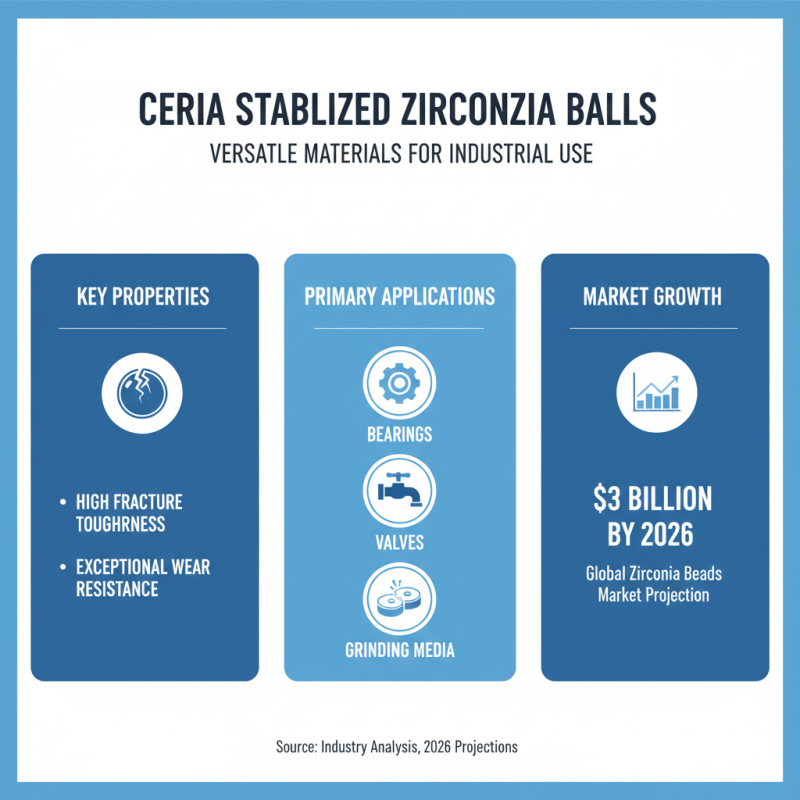
Ceria stabilized zirconia balls have gained recognition in various industrial applications. These balls are known for their high fracture toughness and wear resistance. They are often used in bearings, valves, and grinding media. The global market for zirconia beads is projected to reach around $3 billion by 2026, driven by their versatility.
The unique properties of ceria stabilized zirconia arise from their chemical stability and thermal resistance. Studies indicate that their thermal expansion coefficient is relatively low, making them suitable for applications exposed to high temperatures. In grinding and milling processes, their hardness ensures efficient material processing. An industry report revealed that over 40% of the demand for zirconia balls comes from the ceramics and electronics sectors.
Despite their advantages, there are challenges. The manufacturing process can lead to variability in quality. A 2022 analysis demonstrated that up to 15% of products may not meet industry standards. Companies must continuously refine production techniques. The need for reliable suppliers is more crucial than ever. Quality assurance plays a vital role in the adoption of ceria stabilized zirconia balls across industries.
Key Features and Benefits of Using Ceria Stabilized Zirconia Balls
Ceria stabilized zirconia balls are gaining traction in various industries, notably in grinding and milling applications. These balls offer significant advantages over traditional materials. For instance, their high hardness and wear resistance lead to longer service life and reduced replacement costs. A study from the American Ceramic Society highlights that ceria-stabilized zirconia shows a hardness of over 1200 HV, providing superior performance under extreme conditions.
Additionally, these zirconia balls exhibit exceptional thermal stability. They can withstand temperatures up to 1000°C without significant deformation. This feature is crucial for applications in high-temperature environments, such as in powder metallurgy. It also allows for reduced energy consumption during processing, benefiting organizations focused on sustainability. However, one must consider the cost of ceria-stabilized zirconia, which can be higher than traditional materials, potentially impacting smaller enterprises.
Another noteworthy benefit is their low coefficient of friction. This characteristic enhances efficiency in rolling and sliding mechanisms. However, achieving the perfect balance between performance and cost requires careful evaluation. Industries must assess their specific needs before investing in these advanced materials. As with any technology, continuous improvement and adaptation to specific applications will ensure that ceria stabilized zirconia balls remain a top choice for future innovations.
Top Manufacturers of Ceria Stabilized Zirconia Balls in 2026
In 2026, the demand for ceria stabilized zirconia balls continues to grow. This growth stems from their unique properties, such as high wear resistance and exceptional thermal stability. Manufacturers are focusing on these qualities while exploring new production techniques. The competition among top players is fierce, driving innovation and improvement in product quality.
Leading manufacturers prioritize research and development. They invest in advanced materials and technologies to enhance performance and longevity. Quality control processes are becoming stricter, ensuring consistent product standards. However, some companies struggle with maintaining a balance between cost efficiency and high-quality output. This can lead to variations in performance.
It is important to evaluate potential suppliers thoroughly. Check their production capabilities and past performance. Look at customer reviews and current market trends. This helps identify reliable manufacturers that meet diverse industry needs. Remember, not all suppliers can deliver the same caliber of products. Hence, diligence in selecting the right partner can significantly impact your operations.
Factors to Consider When Choosing the Right Zirconia Balls
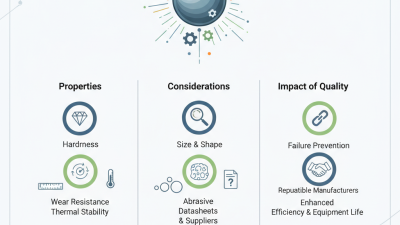
When selecting ceria stabilized zirconia balls, understanding your specific needs is crucial. Look into the size and shape of the balls. They must fit perfectly in your application. A mismatch can lead to inefficiencies or even damage. Also, consider the intended use. Are these balls for grinding, polishing, or another purpose? Each application has its own requirements.
Additionally, the hardness of zirconia balls should be evaluated. Higher hardness often translates to better wear resistance. However, too much hardness may lead to brittleness, which can compromise durability. Always check the quality of the material. Low-quality zirconia can result in inconsistent results and frequent replacements.
Lastly, think about the environment where these balls will operate. Factors like temperature, humidity, and exposure to chemicals can impact performance. Testing in real-world conditions can provide insights into how the balls perform. Making a well-informed choice can save time and resources in the long run. Keep these factors in mind as you explore your options.
Comparative Analysis: Ceria Stabilized vs. Other Zirconia Balls
Ceria stabilized zirconia (CSZ) balls have gained popularity in various applications, notably in the field of
dental materials and advanced ceramics. Their unique properties, such as high resistance to fracture and thermal stability, set them apart from other zirconia balls.
According to a report by the American Ceramic Society, CSZ balls can exhibit up to 30% improved toughness compared to conventional zirconia. This makes them an attractive option for
demanding applications.
When analyzing the performance of ceria stabilized zirconia balls, a few characteristics arise. Compared to tetragonal and cubic zirconia forms, ceria stabilizes the cubic phase, enhancing ionic conductivity.
The ionic conductivity of CSZ can achieve levels up to 1.0 x 10⁻² S/cm at 600°C.
However, there are concerns regarding their susceptibility to hydrothermal aging. While they may outperform others in certain conditions, they may degrade under moisture-rich environments.
Moreover, some studies suggest variations in manufacturing processes can affect consistency.
Quality control remains essential to ensure reliability in performance. Assessing these factors can be a complex task.
Despite their strengths, careful consideration is needed when selecting the right zirconia ball for specific applications.
This complexity can often lead to misunderstandings in performance expectations.