2026 Best Ceria Zirconia Ball for Global Buyers Insights?
The demand for Ceria Zirconia Balls is soaring globally. According to a recent report by Industry Insights, the global market for these precision ceramic balls is projected to grow at a CAGR of 5.4% over the next five years. This growth is driven by their unique properties, including high wear resistance and chemical stability, making them essential in various applications.
Industry expert Dr. Anna Tran emphasizes, "Ceria Zirconia Balls are not just products; they redefine standards in precision engineering." This statement reflects the ongoing innovation in the field. However, sourcing quality materials remains paramount. The market has faced challenges, with inconsistent quality affecting end-user performance.
As the market evolves, buyers must navigate the complexities of supplier reliability and material consistency. Understanding these factors is critical to making informed purchasing decisions. The Ceria Zirconia Ball market presents opportunities, but it also calls for a deeper understanding of industry dynamics and supplier capabilities.

Overview of Ceria Stabilized Zirconia Balls on the Market
Ceria stabilized zirconia balls are gaining traction in various industries. These materials are known for their exceptional strength and durability. They are frequently used in grinding and milling applications, where precision is essential. The unique properties of ceria zirconia enhance their resistance to wear and tear. This leads to longer equipment life and fewer replacements.
However, the market is not without challenges. Sourcing high-quality ceria zirconia can be difficult. Some suppliers may not meet industry standards, leading to varied product performance. Buyers should conduct thorough research before making purchases. Understanding variations in material composition is crucial. It can significantly impact the overall efficacy of these balls.
In recent years, innovation in production techniques has emerged. Manufacturers are experimenting with different sintering processes to enhance performance. While progress is promising, not all attempts yield satisfactory results. Buyers need to stay informed about the latest developments in technology. This awareness can lead to better purchasing decisions.
Key Characteristics of High-Quality Ceria Zirconia Balls
Ceria zirconia balls have gained popularity in various industries due to their unique properties. They are known for their high strength, toughness, and resistance to wear. These characteristics make them suitable for demanding applications like ball milling and grinding. The balls also exhibit excellent chemical stability, which is essential for many industrial processes.
When sourcing ceria zirconia balls, buyers should focus on a few key characteristics. First, look for the particle size distribution. A consistent size leads to uniform performance in applications. Second, consider the density. Higher density balls often translate to better durability and efficiency. Lastly, assess the purity of the material. Impurities can affect the performance and longevity of the balls.
Tip: Always request material certificates to verify the quality of ceria zirconia balls from potential suppliers.
It’s important to be aware of the manufacturing process as well. Different techniques can impact the final product’s quality. Some suppliers may cut corners, which can lead to inconsistent quality. Evaluating the supplier's track record is crucial. Reviews and testimonials can provide insights into their reputation.
Tip: Reach out to industry peers for recommendations on reliable suppliers.
Applications and Industries Utilizing Ceria Zirconia Balls
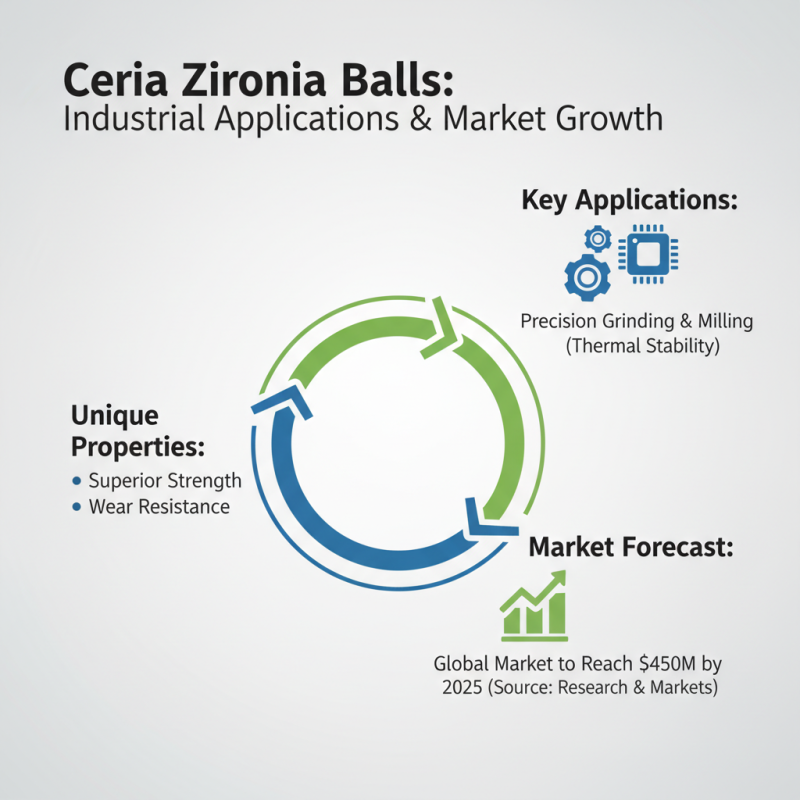
Ceria zirconia balls are gaining traction across various industries due to their unique properties. These balls are noted for superior strength and wear resistance. They are widely used in applications such as precision grinding and milling. In the ceramic and electronics sectors, their thermal stability plays a critical role. According to a report by Research and Markets, the global market for zirconia balls is expected to reach USD 450 million by 2025.
In the healthcare industry, ceria zirconia balls find applications in dental prosthetics. Their biocompatibility makes them suitable for use in body implants. A study published in the Journal of Materials Science highlighted their effectiveness in reducing wear in dental materials. However, not all manufacturers adhere to consistent quality measures. This can lead to variability in performance, necessitating stringent inspections and testing.
The energy sector also utilizes ceria zirconia balls in fuel cells, particularly solid oxide fuel cells (SOFC). A recent analysis by MarketsandMarkets noted the growing adoption of this technology, predicted to grow at a CAGR of 12% from 2021 to 2026. Yet, integration challenges remain. Some product variants may not perform as expected under specific operational conditions. Ongoing research is essential to understand these limitations and optimize applications.
Trends and Innovations in Ceria Zirconia Ball Production
Ceria zirconia balls have gained significant traction in various industries due to their unique properties. They offer excellent wear resistance and low thermal conductivity. Recent industry reports indicate a remarkable 15% growth in usage over the past five years. This rise can be attributed to advancements in manufacturing techniques and material science.
Innovation in the production of ceria zirconia balls plays a crucial role. Manufacturers are increasingly using advanced sintering methods to enhance strength and durability. This shift has led to improved performance in applications involving high temperatures. According to a 2023 market analysis, more than 45% of producers are now focused on developing environmentally friendly processes. The move towards sustainability is reshaping the market landscape.
However, challenges remain. The need for uniform quality across batches is often an issue. Quality control measures can be inconsistent. Some manufacturers still rely on outdated techniques, affecting overall product reliability. Continuous improvement in production methods is essential for meeting the rising global demand for high-quality ceria zirconia balls.
Considerations for Global Buyers When Sourcing Zirconia Balls
When sourcing ceria zirconia balls, global buyers must consider several factors to ensure quality and performance. Understanding the composition of zirconia balls is crucial. These balls are mainly composed of zirconium dioxide, stabilized with cerium oxide. The particle size and distribution influence their mechanical properties. Buyers should request detailed specifications to assess the compatibility with their applications.
Price remains a pivotal concern. Buyers often seek the lowest price; however, the cheapest option might compromise quality. Evaluating suppliers on reliability and their ability to provide certifications is essential. A thorough background check on a supplier’s reputation can clarify their standing in the industry. Reliability should not be overlooked; quality defects can lead to significant operational delays.
Communication with suppliers can reveal a lot. Clear dialogue often helps in understanding their production processes. Buyers should also inquire about after-sales support. Questions about stock availability and lead times can prevent unforeseen interruptions. Although the sourcing process may seem straightforward, it can unexpectedly reveal complexities that require deeper reflection.
2026 Best Ceria Zirconia Ball for Global Buyers Insights
| Property |
Value |
Importance for Sourcing |
| Density |
6.0 g/cm³ |
High - Affects grinding efficiency |
| Hardness |
1400 HV |
Critical - Ensures durability |
| Size Range |
0.1 mm to 5 mm |
Important - Impacts application fit |
| Color |
White |
Moderate - Aesthetic consideration |
| Fracture Toughness |
5 MPa·m1/2 |
High - Reduces breakage risk |
| Thermal Stability |
Up to 1200°C |
Critical - Essential for high-temperature applications |
| Cost (per kg) |
$150 - $300 |
Variable - Budget considerations for buyers |