


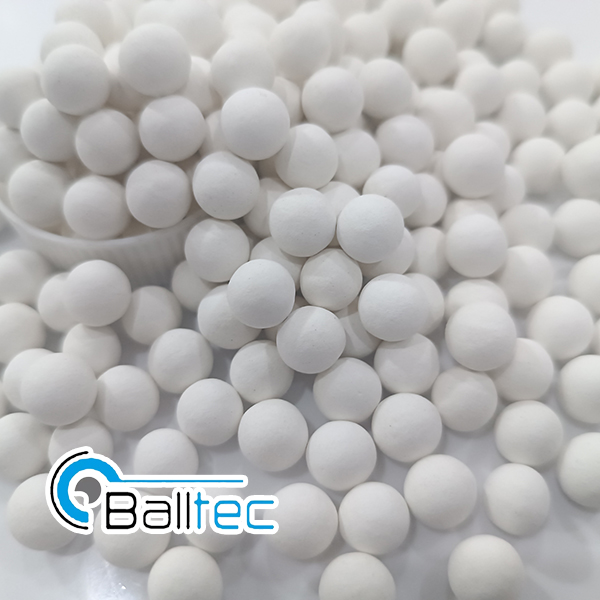
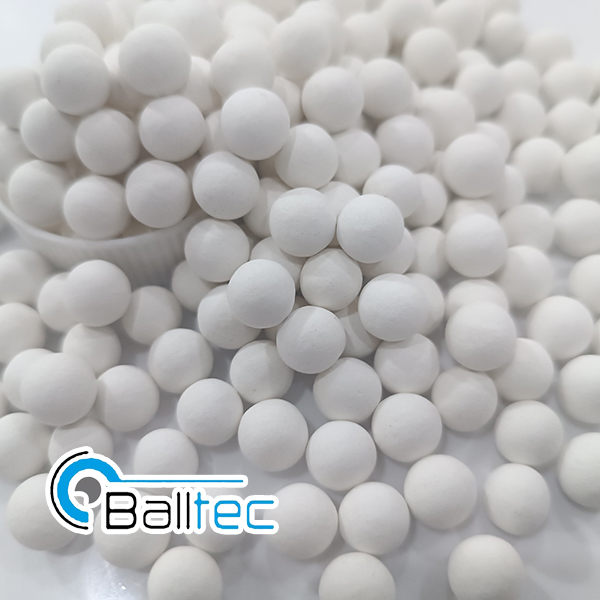
Wear-Resistant High Purity Alumina Grinding Bead for Ink Production
Alumina grinding balls, also known as wear-resistant ceramic balls, ceramic balls, porcelain balls, corundum balls, grinding balls, high-alumina balls, microcrystalline alumina balls, etc., are made from high-quality alumina powder as the raw material, mixed with bauxite and roller bar powder. They undergo processes such as batching, grinding, powder making, forming, drying, and calcination—quite literally going through "eighty-one trials"—and are mainly used as grinding media in the form of grinding balls. They come in various specifications with diameters ranging from 0.5mm to 80mm, offering a wide range of choices.
Alumina grinding balls are generally used in ball mills. When the ball mill starts, the motor and reducer transmit torque to the large and small gears. Driven by these gears, the cylinder begins to rotate. Materials are fed into the cylinder from the feeding end of the ball mill through a feeder. As the cylinder rotates faster and faster, it drives the alumina grinding balls and materials inside to rotate together. The materials are crushed by the grinding and throwing force of the alumina grinding balls. When the particle size of the materials meets the requirements, they are discharged through the discharge end.
Product Specifications
|
Parameter |
95% Alumina Beads |
99% Alumina Beads |
|
Material Purity |
95% Al₂O₃, Fe₂O₃ ≤0.03% |
99% Al₂O₃, Fe₂O₃ ≤0.02% |
|
Density |
3.6–3.7 g/cm³ |
3.8–3.9 g/cm³ |
|
Hardness (Vickers) |
≥1000 HV |
≥1200 HV |
|
Fracture Toughness |
3.5–4.0 MPa·m¹/² |
4.0–4.5 MPa·m¹/² |
|
Wear Rate |
≤0.005%/1000 hours |
≤0.003%/1000 hours |
|
Diameter Range |
0.5–20 mm |
0.3–15 mm |
|
Sphericity |
≤0.01 mm |
≤0.005 mm |
|
Surface Roughness (Ra) |
≤0.08 μm |
≤0.05 μm |
|
Max Operating Temperature |
1200°C |
1600°C |
|
Chemical Resistance |
Resistant to organic solvents, pigments, and binders |
Highly resistant to all ink components, including aggressive solvents |