


The Impact of Zirconia Bead Particle Size on Ink Grinding
Introduction
Ink grinding is a critical process in the printing industry, as it directly affects the quality of the final printed product. The goal of ink grinding is to reduce the particle size of pigments and fillers in the ink to a suitable range, ensuring uniform dispersion, which in turn influences properties such as color strength, gloss, and printability. Zirconia beads have emerged as a widely used grinding medium in this process due to their excellent properties. However, the particle size of zirconia beads plays a crucial role in determining the efficiency and effectiveness of ink grinding. This article aims to explore the impact of zirconia bead particle size on ink grinding, providing insights for optimizing the grinding process.
The Basics of Zirconia Beads in Ink Grinding
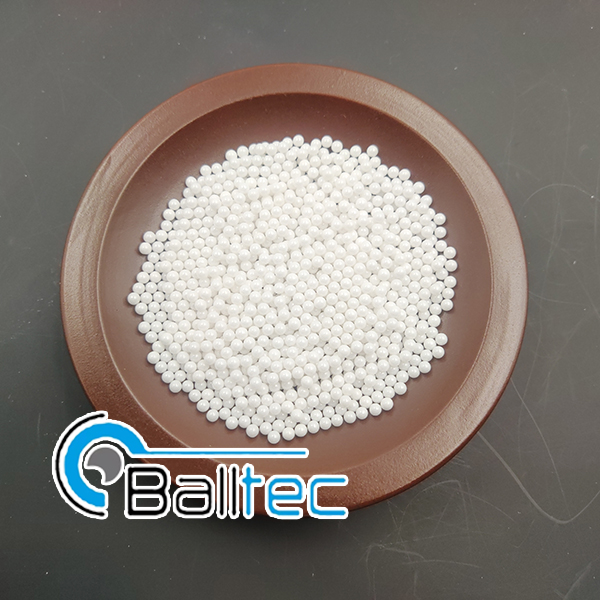
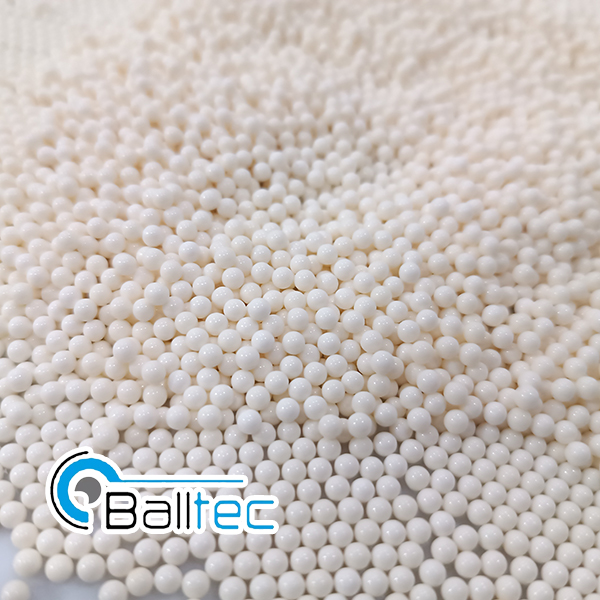
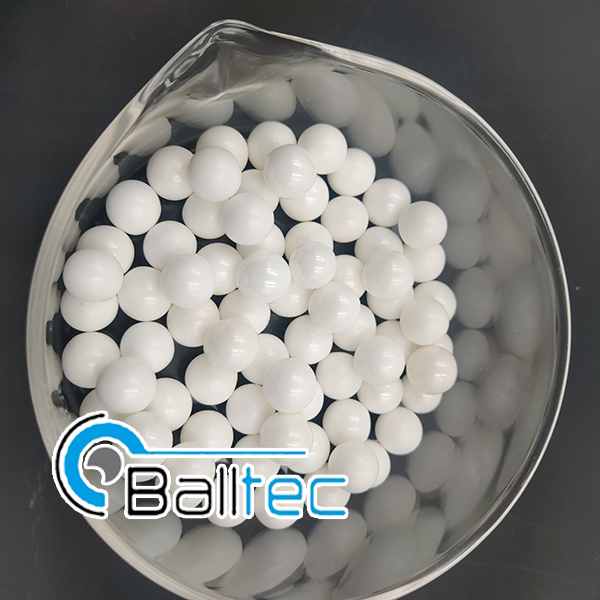
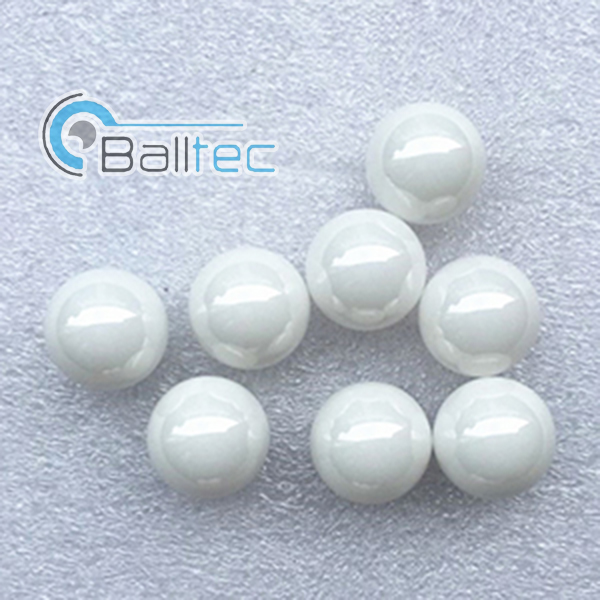
Zirconia beads are composed primarily of zirconium dioxide (ZrO₂) and often contain stabilizers such as yttria to enhance their mechanical properties. They possess several characteristics that make them ideal for ink grinding. Firstly, they have high hardness, which allows them to effectively break down pigment particles without significant wear themselves. Secondly, they exhibit excellent chemical inertness, ensuring that they do not react with the components of the ink, thus preserving the ink's chemical stability. Additionally, zirconia beads have a high density, which generates strong impact and shear forces during the grinding process, promoting efficient particle size reduction. These properties make zirconia beads a preferred choice for achieving high-quality ink grinding results.
How Particle Size Affects Grinding Efficiency
Small-Sized Zirconia Beads
Small-sized zirconia beads, typically in the range of 0.1-0.5mm, offer certain advantages in ink grinding. Due to their small particle size, they provide a large specific surface area, resulting in more contact points with the ink particles. This increased contact leads to more frequent collisions and shear actions, which are beneficial for achieving ultra-fine grinding of the ink. They are particularly suitable for grinding inks that require very fine pigment particles, such as those used in high-resolution printing. However, small-sized beads also have drawbacks. The small size means that they have lower individual impact energy, so the grinding process may take longer to achieve the desired particle size. Moreover, their small size makes them more prone to wear, increasing the risk of contamination of the ink with bead fragments and raising the cost of bead replacement.
Large-Sized Zirconia Beads
Large-sized zirconia beads, usually ranging from 3-5mm, have their own set of characteristics in ink grinding. Their larger size gives them higher individual impact energy, making them effective in the initial stages of grinding, especially for breaking down larger pigment agglomerates. This allows for a more rapid reduction in the average particle size of the ink during the primary grinding phase, improving the overall grinding efficiency in the early stages. However, large-sized beads have a smaller specific surface area compared to small-sized ones, resulting in fewer contact points with the ink particles. This can lead to less uniform grinding, with some larger particles remaining in the ink, making them less suitable for applications that require extremely fine particle sizes.
Medium-Sized Zirconia Beads
Medium-sized zirconia beads, approximately 1-2mm in diameter, strike a balance between the advantages of small and large-sized beads. They have a moderate specific surface area, providing a sufficient number of contact points for effective grinding while also possessing a reasonable amount of impact energy. This balance allows them to achieve a good grinding effect in a relatively short time. They are suitable for a wide range of ink types and grinding requirements, offering a compromise between grinding efficiency and the fineness of the final product. In many standard ink grinding scenarios, medium-sized zirconia beads are the preferred choice due to their versatility.
The Relationship between Particle Size and Final Ink Quality
Particle Size and Color Uniformity
The particle size of zirconia beads has a significant impact on the color uniformity of the final ink. When small-sized beads are used, their ability to thoroughly disperse pigment particles ensures that the pigments are evenly distributed throughout the ink matrix. This uniform dispersion leads to consistent color intensity and hue across the printed surface, reducing the occurrence of color variations. In contrast, large-sized beads may leave some pigment agglomerates unbroken, resulting in uneven color distribution, with areas of higher or lower pigment concentration, which affects the overall color uniformity of the printed product.
Particle Size and Viscosity
Zirconia bead particle size also influences the viscosity of the ground ink. Small-sized beads, due to their extensive contact with the ink particles, can break down the pigment particles into smaller sizes, increasing the surface area of the particles. This increased surface area leads to stronger intermolecular forces between the particles and the ink binder, resulting in a higher viscosity of the ink. On the other hand, large-sized beads may not reduce the particle size as effectively, resulting in a lower surface area of the pigment particles and a relatively lower viscosity of the ink. The viscosity of the ink is crucial for its printing performance, as it affects the ink's flowability and transferability during the printing process. A properly adjusted viscosity ensures that the ink can be evenly applied to the printing substrate, achieving good print quality.
Factors to Consider When Selecting Zirconia Bead Particle Size
Initial Ink Particle Size
The initial particle size of the ink is an important factor to consider when choosing the appropriate zirconia bead particle size. If the initial ink contains large pigment agglomerates, it is advisable to start with large-sized beads for the primary grinding to quickly break down these agglomerates. Once the particle size is reduced to a certain extent, switching to smaller or medium-sized beads can further refine the particles to the desired size. This two-step approach optimizes the grinding efficiency and ensures that the final particle size meets the requirements.
Grinding Equipment Type
Different types of grinding equipment are compatible with different zirconia bead particle sizes. For example, sand mills, which operate with high-speed rotating discs, are more suitable for small-sized beads. The narrow gap between the discs in a sand mill allows small beads to move freely and generate intense shear forces, making them effective for fine grinding. On the other hand, ball mills, which rely on the tumbling motion of the beads, work well with larger-sized beads. The larger beads can take advantage of the tumbling action to generate significant impact forces, making them suitable for coarse grinding. Therefore, the type of grinding equipment available should be considered when selecting the bead particle size.
Grinding Process Parameters
Grinding process parameters such as grinding time, bead-to-ink ratio, and bead hardness interact with the zirconia bead particle size. Longer grinding times may be required when using small-sized beads to achieve the desired particle size, but this can also increase the risk of bead wear. The bead-to-ink ratio affects the number of collisions and shear actions; a higher ratio may be needed with small-sized beads to ensure sufficient contact. Additionally, the hardness of the beads must match the requirements of the grinding process to avoid excessive wear, which can vary depending on the particle size. Therefore, these parameters need to be carefully adjusted in conjunction with the selected bead particle size to optimize the grinding effect.
Case Studies and Experimental Results
Several studies have demonstrated the impact of zirconia bead particle size on ink grinding. In one experiment, three different particle sizes of zirconia beads (0.3mm, 1.5mm, and 4mm) were used to grind the same type of ink. The results showed that after 2 hours of grinding, the ink ground with 0.3mm beads had an average particle size of 0.5μm, while the ink ground with 1.5mm beads had an average particle size of 1.2μm, and the ink ground with 4mm beads had an average particle size of 2.8μm. This indicates that smaller beads can achieve finer particle sizes. Another study focused on color uniformity, finding that inks ground with 1mm beads exhibited better color consistency compared to those ground with 3mm beads, as measured by colorimeter readings. These experimental results confirm the earlier observations about the impact of bead particle size on grinding efficiency and ink quality.
Conclusion
The particle size of zirconia beads has a multifaceted impact on ink grinding. Small-sized beads are effective for achieving ultra-fine particle sizes and good color uniformity but may require longer grinding times and have higher wear rates. Large-sized beads offer higher initial grinding efficiency but may result in less uniform particle sizes. Medium-sized beads provide a balance between the two, making them suitable for many standard applications. When selecting the particle size, factors such as the initial ink particle size, grinding equipment type, and process parameters must be considered. By choosing the appropriate zirconia bead particle size, ink manufacturers can optimize the grinding process, ensuring high-quality inks with desirable properties such as good color uniformity, appropriate viscosity, and excellent printability, ultimately contributing to the production of high-quality printed products.