

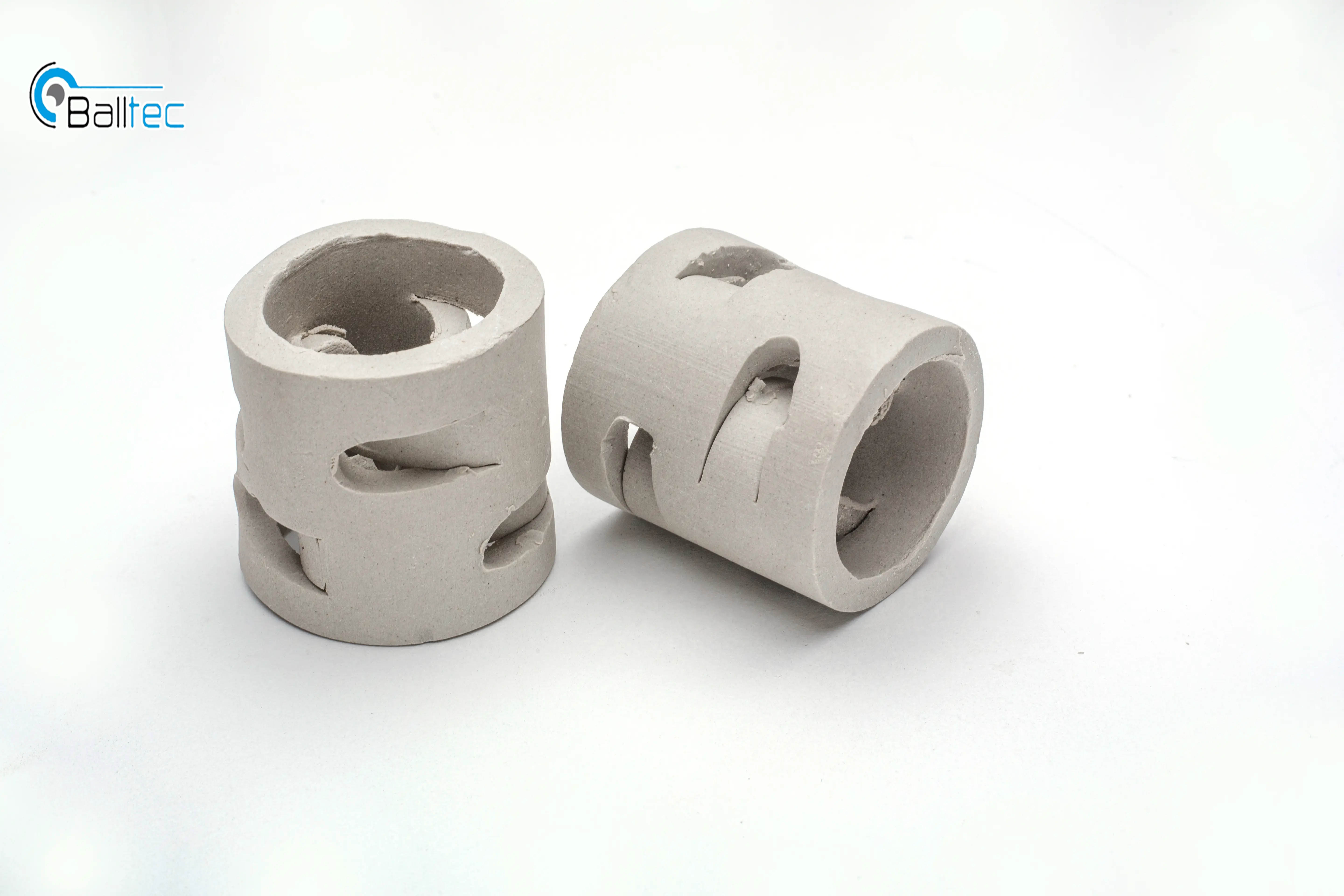
Product Characteristics of Ceramic Intalox Saddle Ring Packing
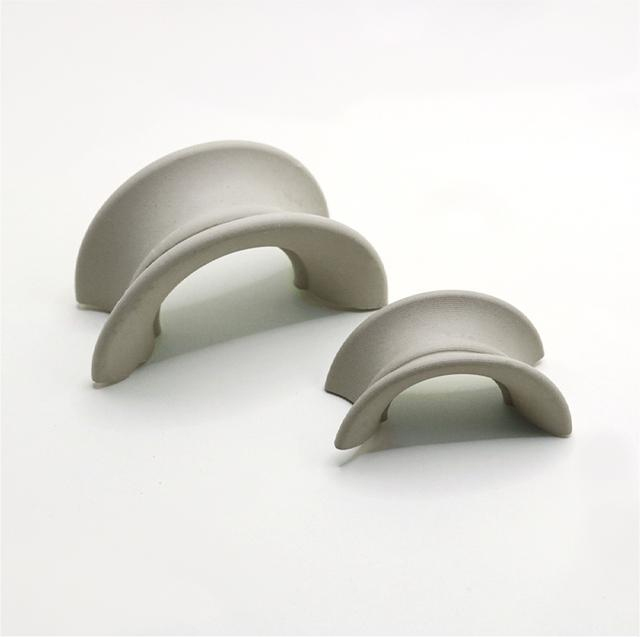
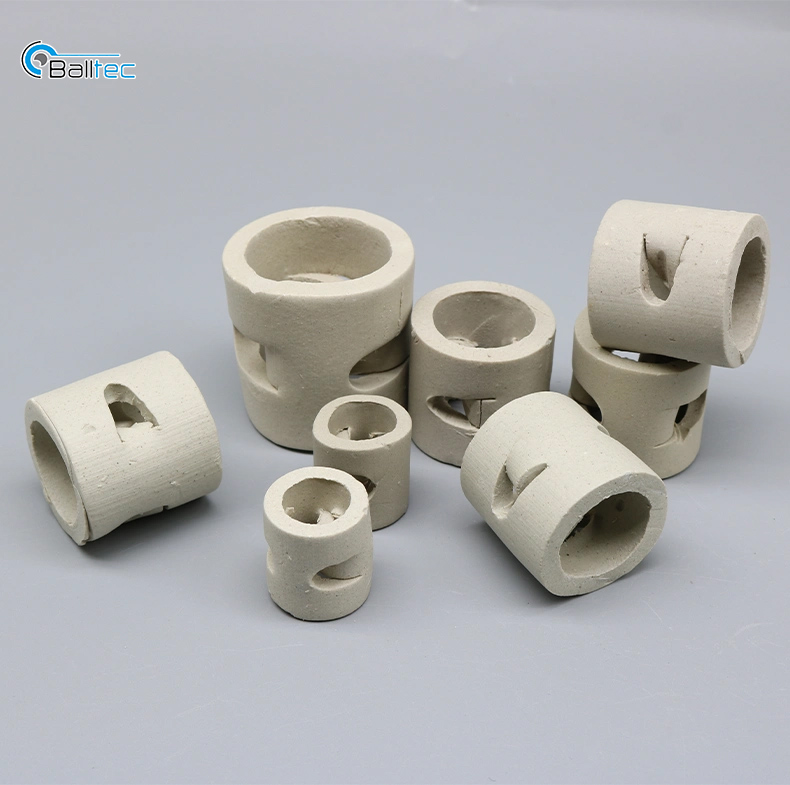
Ceramic Intalox Saddle Ring packing features smooth, curved side surfaces. This increases the contact voids between packing elements within the bed, making it more favorable for the flow and dispersion of gas and liquid through the packing. It overcomes the disadvantage of easy nesting found in arc saddle packing. Compared with ceramic arc saddle packing of the same material, ceramic Intalox Saddle packing offers higher throughput, lower pressure drop, and higher efficiency. This is mainly because Intalox Saddle packing of the same size provides greater voidage in the bed, with mostly curved liquid channels. This reduces resistance to gas flow through the bed and lowers the radial diffusion coefficient of liquid as it flows downward. As a result, the liquid wall-flow effect in ceramic Intalox Saddle ring packing beds is lower than in many other ceramic packing beds. It maintains good liquid distribution; with good initial liquid distribution, the packing layer retains excellent distribution, helping to improve mass transfer coefficients. Saddle-type packing was another wellshaped packing developed after Raschig rings. Ceramic Intalox Saddle packing, in particular, was a highgrade packing that matched the performance of metal Pall ring packing for a long period. Ceramic Intalox Saddle rings offer the advantages of high throughput, low pressure drop, and high efficiency. Ceramic Intalox Saddle rings are a type of ceramic packing manufactured using a continuous extrusion process. Compared with Raschig rings of the same ceramic material, ceramic Intalox Saddle rings feature higher throughput, lower pressure drop, and higher efficiency. The Intalox Saddle ring bed has high voidage and mostly curved liquid passages, which reduce gas resistance through the bed and decrease the radial diffusion coefficient of downwardflowing liquid.