


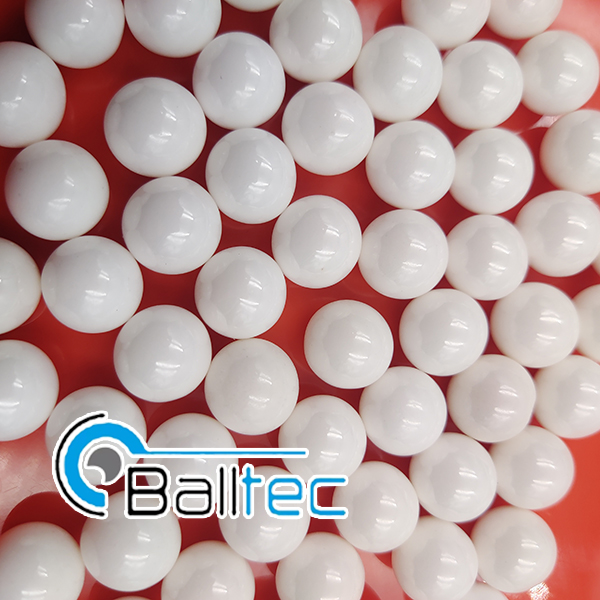
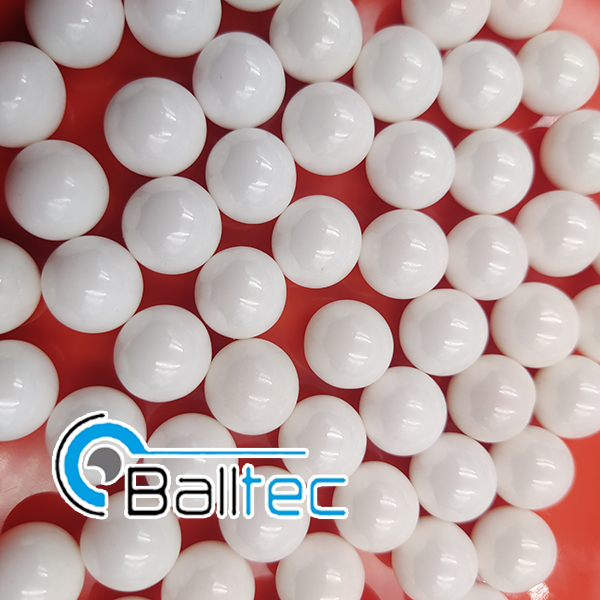
Low-Impurity Zirconia Grinding Media for Electronic Ceramic Production
Zirconia ceramic balls are inorganic non-metallic materials made from zirconia powder and several other additives through powder preparation, batching, and forming processes. As a type of functional ceramics, zirconia ceramic balls have a relatively wide range of applications, and have been widely used in fields such as thermal barrier coatings, catalyst carriers, medical care, health care, refractory materials, and textiles. Zirconia balls exhibit excellent properties in three aspects: mechanics, physics, and chemistry.
- Physical Properties
The physical properties of zirconia ceramic balls refer to their impact resistance and low wear rate. Thanks to the high zirconia content in the beads, the ceramic balls possess physical advantages such as high density, high toughness, low wear, no ball breakage or peeling. They cause minimal dispersion contamination to the ground materials. The wear rate of zirconia ceramic balls is many times lower than that of ordinary ceramic microspheres. Meanwhile, the structure of zirconia ceramic balls is relatively more complex compared with other ceramics, and their thermal conductivity is relatively low, which endows them with excellent thermal insulation performance.
- Mechanical Properties
Zirconia balls are not prone to deformation. Even under high-temperature conditions, the deformation of zirconia ceramic balls is minimal. In addition, zirconia balls feature high strength, high hardness and excellent wear resistance, and can maintain high strength above 100°C. In contrast, most metals tend to soften or even melt under such high-temperature conditions. Grinding balls made of zirconia ceramic balls
Product Specification Table
|
Specification Item |
Technical Parameter |
Test Standard |
|
Main Component (ZrO₂ + Y₂O₃) |
≥ 99.9% |
XRF |
|
Total Impurity Content (Na₂O+Fe₂O₃+SiO₂+Al₂O₃) |
≤ 0.1% |
ICP-MS |
|
Particle Size Range |
0.05mm - 50mm |
Laser Particle Size Analyzer |
|
Density |
6.0 ± 0.1 g/cm³ |
Archimedes Method |
|
Mohs Hardness |
9.0 |
Vickers Hardness Tester |
|
Compressive Strength |
≥ 2200 MPa |
Universal Testing Machine |
|
Wear Rate |
< 0.005%/1000h |
Lab Sand Mill Test |
|
Surface Roughness (Ra) |
≤ 0.01 μm |
Atomic Force Microscope |
|
Operating Temperature Range |
-60℃ - 800℃ |
Thermal Shock Test |
|
Chemical Stability |
No reaction with acids (pH≥2) and alkalis (pH≤12) |
Immersion Test (24h, 25℃) |