


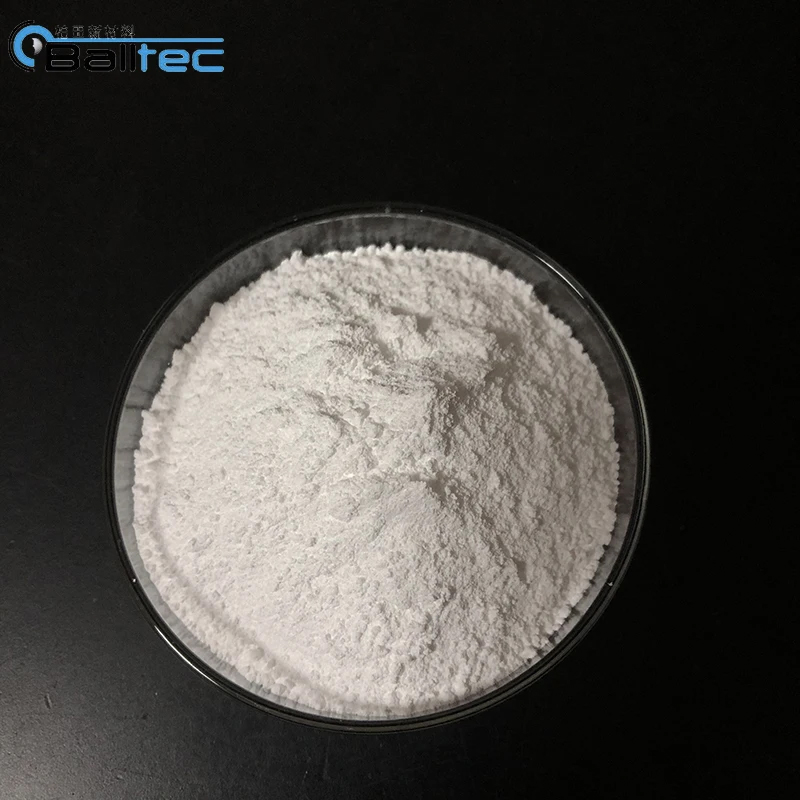
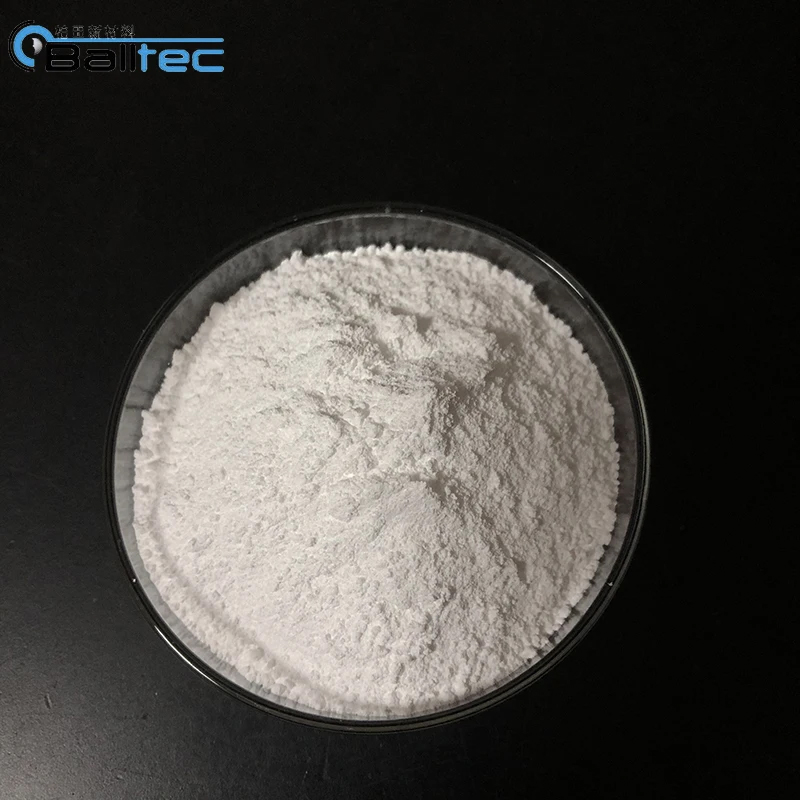
High-Purity Yttria-Stabilized Zirconia Powder for Ceramic Manufacturing
There are the following preparation methods for zirconia ceramic powder.
1. Coprecipitation Method
Advantages: It features simple equipment and processes as well as low production costs. Moreover, it is easy to obtain high-purity nano-scale ultra-fine powder. Currently, most domestic zirconia manufacturers adopt this method due to its ease of control.
Disadvantages: It fails to resolve the problem of hard agglomeration of ultra-fine powder. The powder has poor dispersibility and low sintering activity, resulting in an extended sintering time.
2. Hydrolysis Precipitation Method
The hydrolysis precipitation method is divided into two types: zirconium salt hydrolysis precipitation and zirconium alkoxide hydrolysis precipitation.
Zirconium Salt Hydrolysis Precipitation Process
Advantages: This method is relatively simple and convenient to operate.
Disadvantages: It requires a long reaction time (> 48 hours) and consumes substantial energy. In addition, the resulting powder tends to agglomerate.
Zirconium Alkoxide Hydrolysis Precipitation Process
Advantages: The product consists almost entirely of primary particles with minimal agglomeration. The particles exhibit uniform size and shape with negligible property deviations. It also offers excellent chemical purity and phase structure uniformity.
Disadvantages: The raw material preparation process is relatively complex, leading to high production costs.
3. Hydrothermal Method
Advantages: The zirconia ceramic powder produced is extremely fine with a narrow particle size distribution, reaching the nanometer scale. This method eliminates the need for high-temperature calcination and yields powder with low agglomeration.
Disadvantages: The equipment is complex and expensive, resulting in high production costs. The reaction conditions are harsh, making it difficult to achieve large-scale industrial production.
4. Sol-Gel Method
The sol-gel method is a widely adopted technique for preparing ultra-fine powder. It mainly relies on the colloid dispersion system to form a stable sol of Zr(OH)₄ colloidal particles (less than tens of nanometers) for zirconia ceramics. The sol is then appropriately treated to form a gel containing a large amount of water, which is subsequently dried, dehydrated, and calcined to produce zirconia ultra-fine powder.
Advantages:
- Ultra-fine particle size, reaching submicron or finer scale.
- Narrow particle size distribution.
- High purity with homogeneous chemical composition of zirconia ceramics, achieving molecular or atomic scale uniformity.
- The sintering temperature is 400–500℃ lower than that of traditional methods.
Disadvantages:
- High raw material costs and potential environmental pollution.
- Relatively long processing time.
-
Difficulties in controlling the processes of colloidal particle formation, gel filtration, and washing.
Product Specifications
Key Indicator
Technical Parameter
Advantage Explanation
ZrO₂ + Y₂O₃ Purity
≥99.9%
Minimizes impurity-induced cracks in ceramics
Y₂O₃ Doping Content
3mol% - 8mol% (Customizable)
Adjusts phase stability for different ceramic applications
Average Particle Size (D50)
0.2μm - 2.0μm
Ensures uniform sintering and dense ceramic structure
Bulk Density
1.2g/cm³ - 1.8g/cm³
Optimizes powder flowability during molding
Specific Surface Area
10m²/g - 30m²/g
Enhances reactivity and sintering activity
Impurity Content (Fe₂O₃ + SiO₂)
≤0.05%
Guarantees excellent mechanical and chemical properties