


High-Density Zirconia Grinding Media for Ceramic Glaze Milling
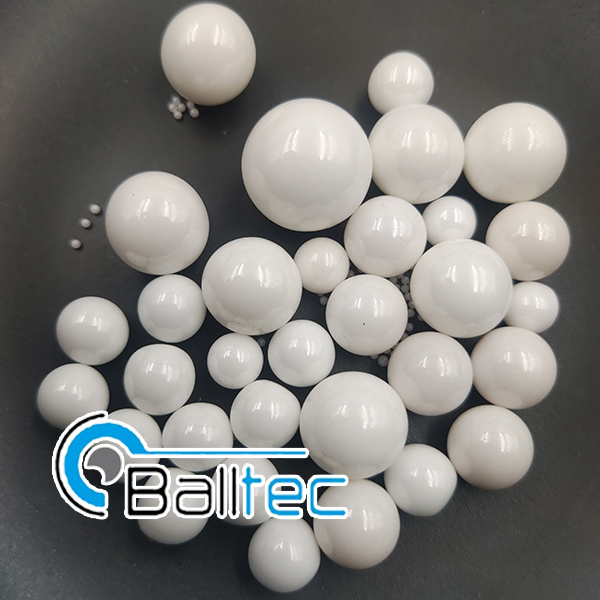
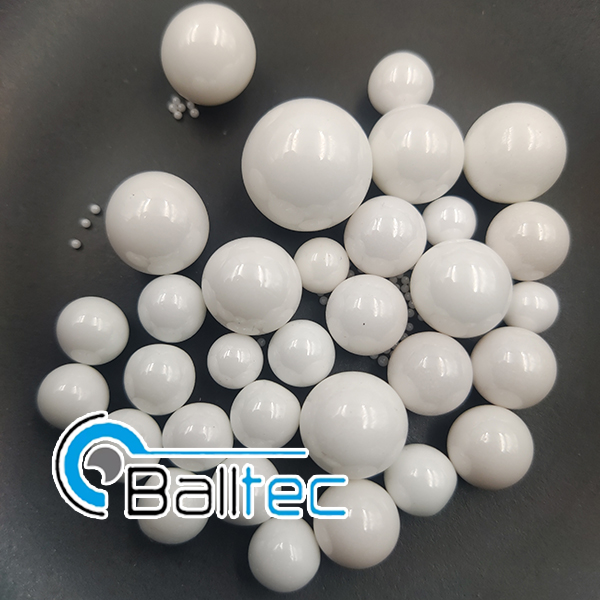
Zirconia ceramic balls require a smooth and glossy surface. The smoother the surface of the media, the lower the wear rate. The factor determining whether the surface of zirconia beads has a glossy finish is the smoothness of the spherical surface; a smooth spherical surface yields an excellent mirror effect, while a rough one results in a poor mirror effect. The factors affecting the surface flatness of zirconia ceramic balls mainly include the internal structure of the material and the degree of external processing of the spherical surface. External processing of the spherical surface refers to polishing operations. The surface of grinding balls is dull right after sintering. After polishing, the spherical surface will exhibit a mirror-like effect. The internal structure includes pores, grain size, liquid phases, etc. Zirconia ceramic balls boast excellent wear resistance and corrosion resistance, making them highly suitable for use as wear-resistant structural ceramics. Thanks to their outstanding performance, they have a wide range of applications. In terms of high-temperature and corrosion resistance, they can be used in the steel, chemical, automotive, vacuum equipment, and motor industries. In the high-speed machinery industry, they are applicable to machine tools, automobiles, aircraft, satellites, electric motors, general industrial machinery, vacuum equipment, etc. Zirconia ceramic balls possess favorable mechanical properties and are widely used as engineering structural materials. The service life stability of zirconia ceramic bearing balls is superior to that of traditional sliding and rolling bearings, with higher wear resistance and corrosion resistance. Zirconia ceramic valves can effectively replace traditional metal alloy valves, especially in harsh working environments, as they can effectively reduce wear and enhance corrosion resistance, thereby significantly extending the service life. Zirconia ceramic grinding balls are extensively applied in various types of grinding mills.
Product Specification Table
|
Specification Item |
Technical Parameter |
Test Method |
|
Main Component |
ZrO₂ ≥ 95%, Y₂O₃ = 3-5% (stabilizer) |
X-ray Fluorescence (XRF) |
|
Density |
6.0 - 6.1 g/cm³ |
Archimedes Principle |
|
Particle Size Range |
0.5 mm - 20 mm (Customizable) |
Vernier Caliper / Laser Particle Analyzer |
|
Vickers Hardness (HV) |
≥ 1250 |
Vickers Hardness Tester |
|
Wear Rate |
< 0.003%/1000h |
Lab Scale Sand Mill Test |
|
Surface Roughness (Ra) |
≤ 0.015 μm |
Atomic Force Microscope (AFM) |
|
Compressive Strength |
≥ 2300 MPa |
Universal Testing Machine |
|
Chemical Stability |
No reaction with pH 2-13 solutions |
Immersion Test (24h, 25°C) |
|
Sphericity |
≥ 0.98 |
Optical Spherometer |