65 Zirconia Silicate Bead Best Applications and Benefits Explained?
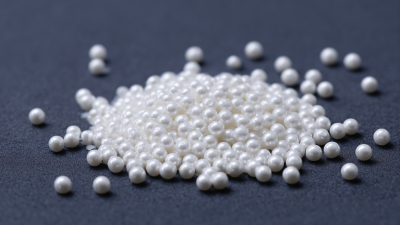
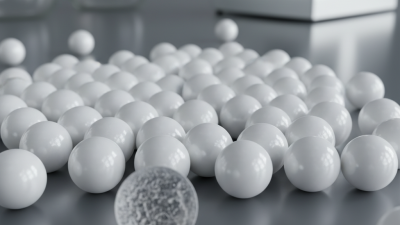
The 65 Zirconia Silicate Bead has gained substantial attention in various industries. This tool is known for its unique properties, making it a favorite among manufacturers and professionals. These beads offer durability and superior performance in grinding and dispersing applications.
Understanding the best applications of the 65 Zirconia Silicate Bead is crucial for maximizing its benefits. Users can achieve fine particle sizes and efficient processes with these beads. Their cost-effectiveness is another point of interest, although some may consider them an investment.
The versatility of the 65 Zirconia Silicate Bead shines in multiple fields, including paints, coatings, and inks. However, selecting the right bead for specific uses can be challenging. In practice, trial and error is often necessary, leading to lessons learned. Exploring these aspects provides essential insights into optimizing production methods effectively.
Applications of Zirconia Silicate Beads in Industrial Processes
Zirconia silicate beads find diverse applications in industrial processes. Their exceptional hardness makes them ideal for grinding and milling materials. In paint and ink manufacturing, they enhance pigment dispersion, resulting in vibrant colors and improved product quality. Zirconia silicate beads enable finer particle sizes, leading to better performance in various formulations.
Moreover, they offer advantages in the ceramic industry. Used in the grinding of raw materials, they promote uniform particle size distribution, which is crucial for producing high-quality ceramics. The durability of zirconia silicate beads also translates to cost efficiency; fewer bead replacements are necessary, reducing downtime in production.
While the benefits are clear, there are challenges to consider. Not all processes will maximize the potential of these beads. It takes expertise to determine the best fit for specific applications. Variability in material types can affect performance. Continuous testing and evaluation are essential to ensure optimal results.
Key Benefits of Using Zirconia Silicate Beads Over Other Materials
Zirconia silicate beads are gaining traction in various industries due to their unique properties. These beads excel in applications requiring precise grinding and mixing. Their hardness is notable, allowing them to withstand intense mechanical forces. This durability significantly extends their lifespan compared to traditional materials.
One of the key benefits of zirconia silicate beads is their low density. This lightness reduces the energy consumption during processes, resulting in significant cost savings. Additionally, the smooth surface of these beads minimizes wear on machinery, again enhancing efficiency. Their uniform size ensures consistent results, which is vital for applications in laboratories and manufacturing.
However, it’s essential to consider some drawbacks. While zirconia silicate beads are highly effective, they might not always be the best choice for every application. Certain processes could benefit from different materials. Users should assess specific needs and operational conditions to ensure the right fit.
65 Zirconia Silicate Bead Best Applications and Benefits Explained
| Application |
Key Benefits |
Comparison with Other Materials |
| Ceramic Grinding |
High durability and chemical resistance |
Longer lifespan compared to glass beads |
| Paints and Coatings |
Fine particle size enhances mixing efficiency |
Better dispersion than steel beads |
| Ink Manufacturing |
Minimal contamination in formulations |
Lower wear and tear than plastic beads |
| Food Processing |
Non-toxic and safe for food contact |
Superior hygiene over metal beads |
| Pharmaceuticals |
High purity and low wear |
Clean and contaminant-free compared to other materials |
Impact of Zirconia Silicate Beads on Product Quality and Consistency
Zirconia silicate beads have become a key player in various industries, particularly in terms of enhancing product quality and consistency. These beads are favored for their high durability and low wear on equipment, which directly influences manufacturing processes. According to a 2021 industry report, using zirconia silicate beads can reduce product particle size variation by up to 30%. This is crucial in industries where precision is paramount, such as pharmaceuticals and cosmetics.
The impact of these beads extends beyond mere size reduction. Their high impact resistance helps maintain consistent grinding efficiency. A recent study indicated that companies employing zirconia silicate beads reported a 15% increase in batch homogeneity. This improvement is vital for ensuring that every unit of production meets required quality standards. However, some manufacturers have noted that improper bead sizing may lead to suboptimal outcomes, highlighting the need for careful selection.
Despite their benefits, quality control issues may still arise. Some users have experienced challenges with bead compatibility in specific applications, affecting consistency. Addressing these issues requires ongoing research and adjustments to formulations. Understanding the unique properties of zirconia silicate beads and their interaction with different materials will help refine processes and improve overall product outcomes.
Comparative Analysis of Zirconia Silicate Beads in Various Industries
Zirconia silicate beads have gained significant attention across various industries for their unique properties. These beads are known for their high density and exceptional hardness. They exhibit superior performance in grinding and dispersing applications. Their applications span from ceramics to coatings and inks.
In the ceramic industry, zirconia silicate beads enhance the strength and durability of final products. They contribute to finer particle sizes, improving the overall quality. Similarly, in the coatings industry, these beads ensure better dispersion of pigments. This leads to more uniform and vibrant colors in paints and coatings.
Despite the advantages, not all applications yield perfect results. Some users report wear and tear in high-temperature settings. This raises questions about their longevity in certain processes. Users should continuously evaluate the performance of zirconia silicate beads, especially in demanding environments. This reflection is essential for optimizing their use and ensuring satisfactory outcomes in their respective industries.
Best Practices for Utilizing Zirconia Silicate Beads in Manufacturing
Zirconia silicate beads are widely used in various manufacturing processes. They are known for their high density and exceptional hardness. These properties make them ideal for applications such as grinding, polishing, and surface preparation.
According to a recent industry report, zirconia silicate beads can improve grinding efficiency by up to 30%. This significant increase is particularly valuable in sectors like ceramics and coatings.
Best practices for utilizing zirconia silicate beads include optimizing bead size and distribution. The right size can enhance flow characteristics and reduce wear on equipment. Using a mix of sizes may also improve the process efficiency.
It’s worth noting that while these beads are durable, they can break under extreme conditions. Regular monitoring is essential to ensure they remain effective.
Additionally, maintaining appropriate bead-to-media ratios is crucial. In certain applications, an incorrect ratio can lead to suboptimal results. Overloading the system may cause excessive wear on both beads and machinery. Adopting these best practices can lead to improved product quality and operational reliability.
For any manufacturing setting, understanding the nuances of bead application is vital for long-term success.