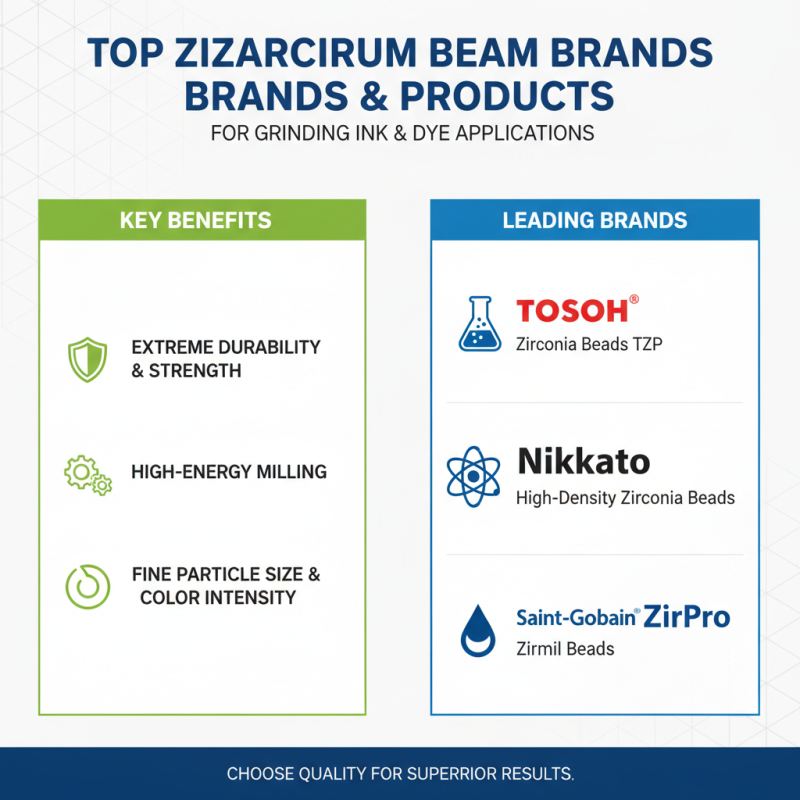
Top Zirconium Beads for Grinding Ink and Dye Applications?
In the world of ink and dye production, the choice of grinding media is crucial. Zirconium beads stand out as a preferred option for many manufacturers. Their unique properties enhance grinding efficiency and produce high-quality results. Zirconium Beads Grinding Ink Dye applications benefit from their durability and resistance to wear.
These beads can handle the intense demands of grinding processes. Their smooth surface minimizes contamination, ensuring pure colorants. This is vital for industries that prioritize pigment integrity. High-performance grinding beads lead to consistent formulations and improved final products. However, selecting the right type of zirconium beads can be challenging.
Different formulations exist for various applications. Not all zirconium beads work equally for every need. Companies must invest time into testing and understanding the best fit for their specific processes. It's essential to balance cost with performance. Real-world experiences show that the right zirconium beads can significantly enhance productivity and quality in ink and dye applications.
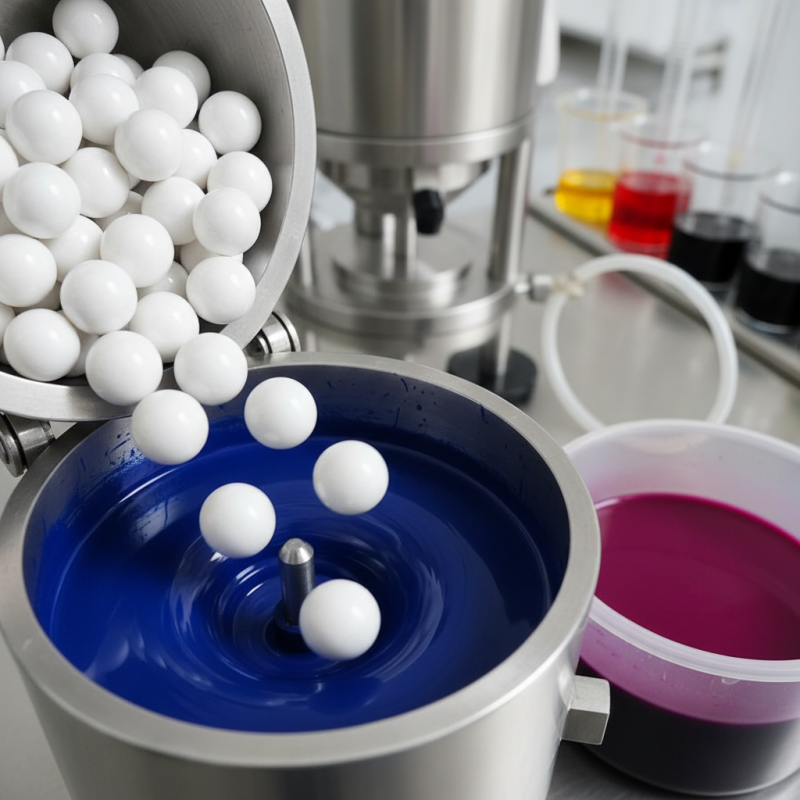
Overview of Zirconium Beads in Grinding Applications
Zirconium beads play a vital role in grinding applications for inks and dyes. Their high density and hardness make them effective for achieving fine particle sizes. This is essential in paint manufacturing, where color consistency is crucial. The beads are designed to withstand intense conditions, which adds to their reliability in various processes.
Using zirconium beads can lead to faster milling times. However, there are instances where bead selection may not yield the expected results. Factors such as bead size and mill configuration can impact efficiency. Grinding too coarse or too fine can lead to product waste. Additionally, not all formulations react the same with zirconium beads, which requires careful testing.
Despite their advantages, some users report challenges in maintaining consistent performance. This can stem from inadequate maintenance or incorrect operational parameters. It's essential to regularly review these aspects to optimize grinding efficiency. Experimenting with bead sizes and milling durations can often lead to improved results. Ultimately, understanding the unique characteristics of zirconium beads is key to maximizing their potential in grinding applications.
Top Zirconium Beads for Grinding Ink and Dye Applications
This chart displays the effectiveness of various zirconium bead sizes in grinding applications, specifically focusing on their performance for ink and dye. The beads are measured in microns, and their corresponding grinding efficiency is evaluated based on a standard scale.
Key Properties of Zirconium Beads for Ink and Dye Grinding
Zirconium beads are increasingly favored in ink and dye grinding applications due to their unique properties. Their impressive hardness and density provide efficient grinding performance. According to a recent study published in the "Journal of Material Science," zirconium beads exhibit a high wear-resistance rate, making them ideal for industries requiring durability. This property is crucial when working with abrasive materials, ensuring longer bead lifespans and reduced downtime.
Another key feature of zirconium beads is their low contamination risk. Unlike some grinding media, zirconium does not react with harsh solvents or dyes. This characteristic helps maintain the purity of the final product. A report from the "American Chemical Society" highlights that using zirconium beads can lower contamination levels by up to 30% compared to traditional media. This results in higher quality inks and dyes, a crucial factor in competitive markets.
Tip: When selecting zirconium beads, consider their size. Smaller beads yield finer particle sizes but may require more energy to achieve desired results. Conversely, larger beads are more energy-efficient but may not break down larger pigments effectively. Balance is essential for optimal grinding efficiency.
Top Zirconium Beads for Grinding Ink and Dye Applications
| Property |
Description |
Value Range |
| Density |
The mass per unit volume of the zirconium beads. |
5.6 - 6.0 g/cm³ |
| Hardness |
Resistance to abrasion and wear during grinding operations. |
> 1200 HV (Vickers) |
| Chemical Resistance |
Stability in acidic and basic environments. |
Stable in pH 3-14 |
| Size |
Dimension of the beads suitable for various grinding applications. |
0.1 - 1.5 mm |
| Roundness |
The spherical shape aiding in efficient grinding. |
> 90% |
| Impact Resistance |
Ability to withstand mechanical shocks during usage. |
High |
Comparison of Zirconium Beads with Other Grinding Media
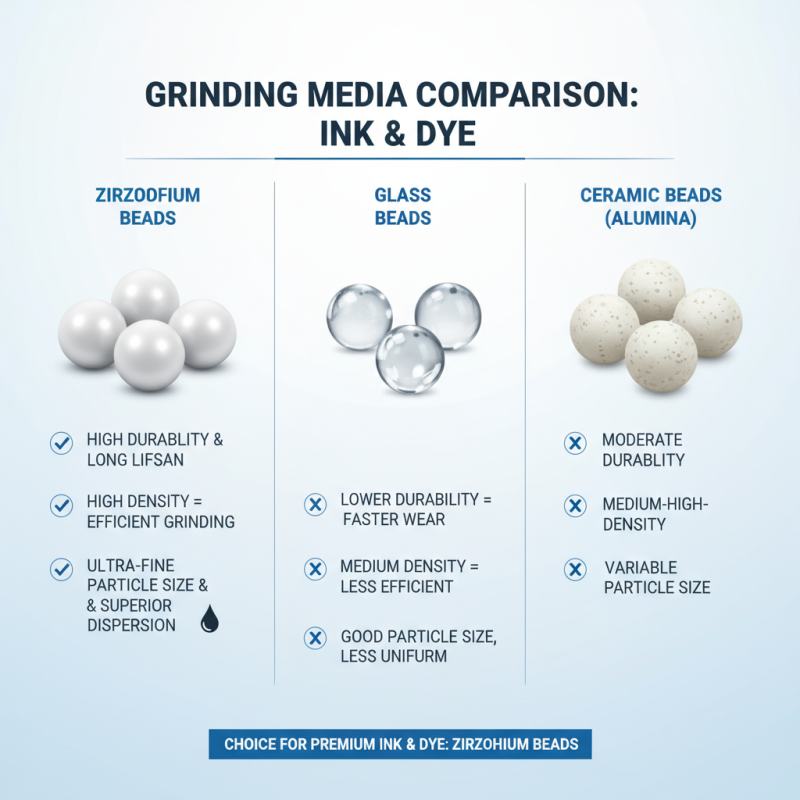
When it comes to grinding ink and dye, choosing the right media can make a significant difference. Zirconium beads stand out for their durability and high density. They efficiently break down pigments, offering a finer particle size and improved dispersion.
Compared to other grinding media, zirconium beads exhibit better wear resistance. This leads to fewer replacements over time. In contrast, glass or ceramic beads may chip or break, releasing impurities into products. Not every material suits every application, though. Evaluating the specific needs of your process is crucial.
**Tips:** Always consider the viscosity of your inks or dyes. Heavier materials may require denser beads for effective grinding. Also, be aware of bead size. Smaller beads may increase the surface area but can reduce grinding efficiency at times. Experimentation may be necessary for optimal results.
Best Practices for Using Zirconium Beads in Industrial Settings
When using zirconium beads in industrial applications, attention to detail is crucial. These beads offer excellent durability, making them ideal for grinding inks and dyes. However, their effectiveness depends on several factors, such as bead size and density. The right choice enhances performance, but miscalculating these parameters can lead to suboptimal results.
Proper machine settings play a significant role in maximizing grinding efficiency. Operators should monitor speed and duration closely. Finding the sweet spot is often a trial-and-error process. An incorrect speed can either overheat the beads or fail to achieve the desired particle size. This feedback loop is essential for improving future operations.
Regular maintenance of equipment is non-negotiable. Accumulated wear can affect consistency in production. Operators should assess wear and tear frequently. A lack of attention here can lead to costly downtime. By fostering a culture of vigilance, teams can ensure a smoother workflow. Overall, precision in setup and awareness of potential pitfalls are essential in leveraging zirconium beads effectively.