How to Choose the Right Zirconia Ball Media for Your Industry Needs
When it comes to the selection of grinding media for various industrial applications, Zirconia Ball Media stands out as a preferred choice due to its exceptional properties. Known for its high hardness, durability, and resistance to wear, Zirconia Ball Media is ideal for environments where efficiency and longevity are crucial. Industries such as ceramics, electronics, and pharmaceuticals often rely on this advanced material to achieve optimal results in their grinding processes.
Choosing the right Zirconia Ball Media requires careful consideration of multiple factors—such as the type of materials to be processed, the desired particle size, and the specific grinding technique employed. Understanding these elements can significantly enhance performance and productivity, allowing businesses to achieve their operational goals. As the demand for high-quality finishes and uniform particle sizes increases, selecting the appropriate Zirconia Ball Media tailored to particular industry needs has never been more critical. This introductory guide aims to equip professionals with the necessary insight to make informed decisions in the selection process.

Factors to Consider When Selecting Zirconia Ball Media
When selecting zirconia ball media for industrial applications, several key factors must be considered to ensure optimal performance. First and foremost, the size of the zirconia balls is crucial. The diameter can significantly influence the effectiveness of the milling process, with smaller balls being more efficient for fine grinding and larger balls being suitable for coarse grinding. It is essential to match the ball size with the particle size of the materials being processed to achieve the desired results.
Another important factor is the density of the zirconia balls. Higher density media can lead to greater impact forces during grinding, improving the efficiency of material reduction. Furthermore, the hardness of the zirconia is vital; it should be high enough to resist wear and deformation during use. The chemical composition and purity of the zirconia can also affect its performance, as impurities can introduce unwanted reactions with the materials being processed. By thoroughly evaluating these characteristics, industries can confidently choose zirconia ball media that meets their specific needs and enhances their operational efficiency.
The Impact of Ball Size on Grinding Efficiency and Quality
The size of zirconia ball media plays a crucial role in determining the efficiency and quality of the grinding process across various industries. Smaller balls typically provide more effective grinding for finer materials, as they have a higher surface area relative to their mass. This increased contact enhances the energy transfer during the milling process, facilitating the breakdown of particles into smaller sizes while achieving a uniform distribution. Conversely, larger balls are more suitable for coarser materials, as they can exert greater force, leading to a more aggressive and impactful grinding action.
Moreover, the interaction between ball size and the specific materials being processed cannot be overlooked. For instance, denser and harder materials may require larger zirconia balls to withstand the impact without chipping or breaking. On the other hand, fragile materials benefit from smaller balls that reduce the risk of over-grinding and maintaining product integrity. Thus, when selecting zirconia ball media, it's imperative to consider not only the size but also the material properties to optimize the grinding performance for desired outcomes.
How to Choose the Right Zirconia Ball Media for Your Industry Needs
| Ball Size (mm) |
Application |
Grinding Efficiency (%) |
Quality of Finish (Ra µm) |
| 0.5 |
Fine Grinding |
90 |
0.1 |
| 1.0 |
Medium Grinding |
85 |
0.5 |
| 2.0 |
Coarse Grinding |
75 |
1.0 |
| 3.0 |
Rough Grinding |
60 |
2.0 |
Comparing Density and Hardness for Optimal Performance
When it comes to selecting zirconia ball media for industrial applications, two critical factors stand out: density and hardness. The density of zirconia media is typically around 6.0 to 6.1 g/cm³, which contributes to its performance in grinding and dispersion processes. Higher density materials often provide better energy transfer during milling, making them more effective for applications that require fine particle size reduction. For instance, industries such as ceramics, electronics, and pharmaceuticals demand precision and efficiency, and choosing the right density can significantly impact the desired output.
Hardness, measured on the Mohs scale, is another essential characteristic of zirconia balls, often rated between 8 and 8.5. This level of hardness ensures that the media withstands wear and tear during high-energy processes, offering durability in demanding operations. Studies indicate that media with higher hardness tend to maintain their shape and size longer, which is crucial in applications such as paint, inks, and coatings, where particle size consistency is vital for product quality. By carefully evaluating the density and hardness of zirconia ball media, industries can optimize their processes, enhance product quality, and reduce costs associated with media replacement and downtime.
Analyzing the Cost-Effectiveness of Different Zirconia Materials
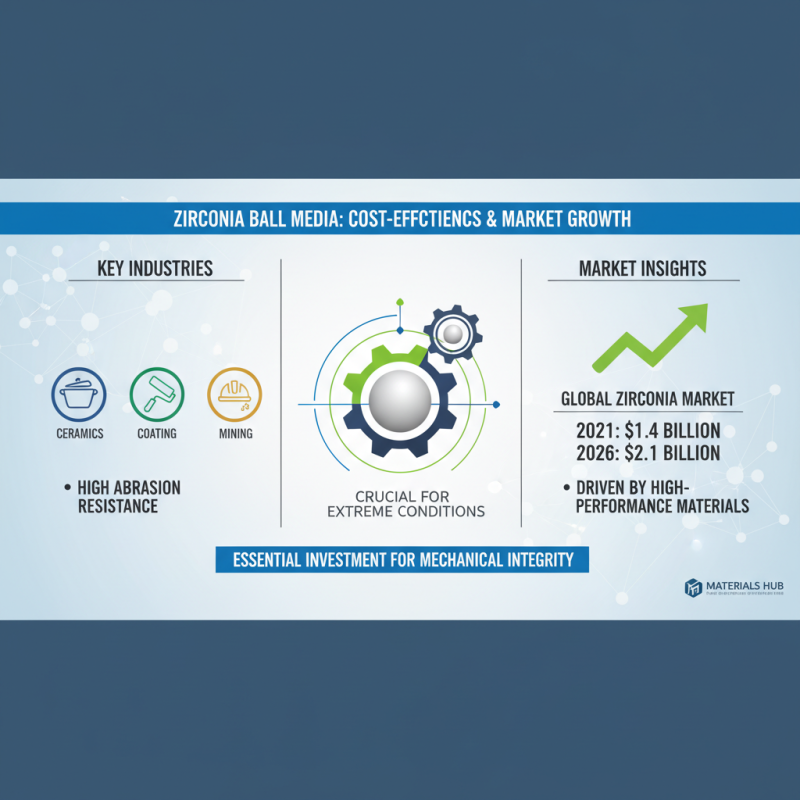
When it comes to selecting zirconia ball media, understanding the cost-effectiveness of various zirconia materials is crucial for industries such as ceramics, coating, and mining. According to a recent report by MarketsandMarkets, the global zirconia market is expected to grow from $1.4 billion in 2021 to $2.1 billion by 2026, driven by the increasing demand for high-performance materials that can withstand extreme conditions. Specifically, industries requiring high abrasion resistance without compromising on mechanical properties have found zirconia media to be an essential investment.
The cost-effectiveness of zirconia materials can often be measured through their longevity and performance efficiency. For instance, the wear rate of zirconia balls is significantly lower than that of conventional media like steel, often extending their operational lifespan by up to 80%. This remarkable durability translates into reduced downtime and maintenance costs, making zirconia a financially savvy choice for long-term applications. A technical paper from the International Journal of Advanced Manufacturing Technology highlights that the reduced cycle times and enhanced product quality achieved through the use of high-quality zirconia media contribute to an overall improvement in productivity, yielding substantial savings that outweigh initial procurement costs.
Selecting the right zirconia material involves careful consideration of both initial investment and ongoing operational costs. With different formulations available—varying in density, hardness, and cost—businesses must align their choices with specific operational demands and performance criteria to optimize both efficiency and budget. The industry trend indicates a gradual shift towards advanced ceramic media, which, despite potentially higher upfront expenses, promise greater returns in production efficacy and product consistency over time.
Application-Specific Recommendations for Zirconia Ball Media
When selecting the right zirconia ball media for various industrial applications, it is crucial to consider the specific operational requirements, including size, density, and wear resistance. Zirconia, known for its exceptional toughness and hardness, is often favored in industries such as ceramics, electronics, and pharmaceuticals. According to a recent market analysis by Research and Markets, the global zirconium market is projected to reach $1.2 billion by 2025, indicating a substantial growth driven by the increased demand for high-performance materials.
For ceramic applications, a smaller diameter zirconia ball, such as 0.5mm to 3mm, is recommended to ensure efficient grinding and milling without damaging the substrates. In the electronics sector, where precision is paramount, the use of high-density zirconia media can enhance the particle size distribution during the milling process. The data suggests that the use of zirconia ball media can significantly reduce contamination levels – with studies showing contamination rates dropping by over 50% compared to traditional media.
In the pharmaceutical industry, where bio-compatibility and regulatory standards are stringent, selecting zirconia balls with a smaller grain size, typically around 1mm, can improve the effectiveness of drug milling while adhering to safety standards. Moreover, the use of non-toxic zirconia media has been reported to increase product efficacy, underscoring the importance of application-specific choices in media selection. This targeted approach ensures that industries can achieve optimal processing results while maintaining high levels of quality and adherence to industry standards.