What are the Benefits of Ceria Zirconia Balls in Industry?
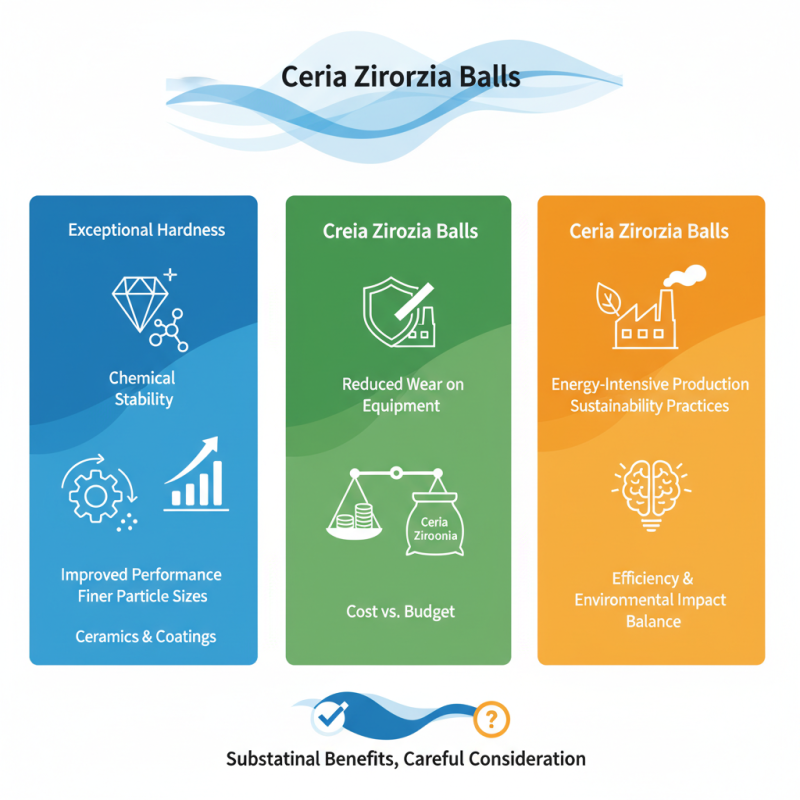
Ceria Zirconia Balls have gained significant attention in various industrial applications. These balls are known for their exceptional hardness and chemical stability. Their qualities make them ideal for grinding and milling processes. The use of Ceria Zirconia Balls has been increasing steadily due to their unique properties.
In the ceramics and coatings sector, these balls offer improved performance. They help achieve finer particle sizes. This leads to better product quality. Furthermore, they reduce wear on milling equipment. However, the cost of Ceria Zirconia Balls is higher than traditional materials. Industries must weigh the benefits against their budget.
Despite the advantages, there are challenges in using Ceria Zirconia Balls. Their production can be energy-intensive. This raises questions about sustainability practices. Companies should reflect on how to balance efficiency and environmental impact. Overall, the benefits of Ceria Zirconia Balls can be substantial, yet careful consideration is necessary.
Overview of Ceria Zirconia Balls and Their Composition
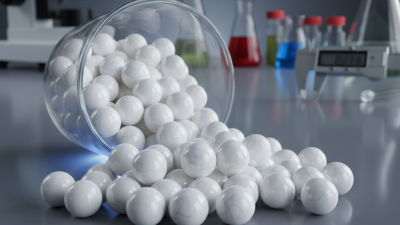
Ceria zirconia balls have gained popularity in various industrial applications. Their unique composition is crucial to their effectiveness. These balls are made from zirconium dioxide, enhanced with cerium oxide. This combination improves the material's toughness and stability under stress.
The manufacturing process of ceria zirconia balls ensures high density and precision. They are often used in grinding, milling, and dispersion processes. Their excellent wear resistance means they last longer than many traditional materials. However, not every application benefits equally from ceria zirconia balls. Some industries might find cost considerations challenging.
Additionally, the production of these balls can sometimes lead to inconsistencies in quality. Factors like temperature and sintering time play a significant role. Small variations can affect the overall performance. Understanding these details is essential for optimal use in industrial settings.
Key Properties of Ceria Zirconia Balls
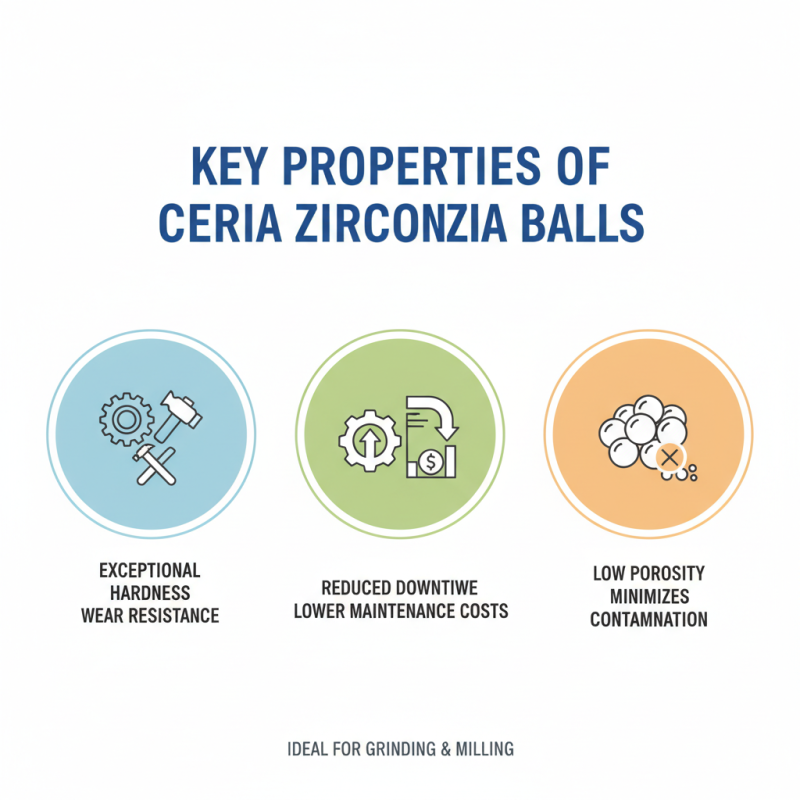
Ceria zirconia balls exhibit several key properties that make them valuable in various industrial applications. These balls are known for their exceptional hardness and wear resistance. This makes them ideal for grinding and milling processes. Their durability helps reduce downtime and maintenance costs for machinery. Moreover, they have low porosity, which minimizes contamination risks during operation.
The thermal stability of ceria zirconia balls is another notable property that stands out. They can withstand high temperatures without degrading. This makes them suitable for high-temperature applications, such as in ceramics and metal processing. Despite these advantages, manufacturers need to ensure proper handling, as a careless approach can lead to surface damage.
Additionally, ceria zirconia balls are lightweight yet strong. This characteristic allows for easier transportation and processing. However, their production can be challenging, requiring precise methods to achieve the desired size and density. Small inconsistencies can affect performance negatively. Crafting these balls demands attention to detail and a commitment to quality control. In conclusion, while ceria zirconia balls provide numerous benefits, continuous improvement is necessary to maximize their potential in various industries.
Industrial Applications of Ceria Zirconia Balls
Ceria zirconia balls are gaining popularity in various industrial applications. These balls, known for their exceptional durability, are often used in grinding and milling processes. Their unique properties allow for efficient particle size reduction, resulting in finer materials. In industries like ceramics and paints, the finer grind can lead to improved product quality.
In the field of biotechnology, ceria zirconia balls play a critical role. They are utilized as support materials in different biological applications. Their chemical stability is important when used with sensitive biological substances. However, there is a need to evaluate potential interactions with specific compounds. Ensuring compatibility can be challenging but is crucial for success.
Another promising application is in energy storage. Ceria zirconia balls are used in advanced battery technologies. They can enhance ionic conductivity, which is a key factor in efficiency. Despite these advantages, the cost of ceria zirconia can be a barrier for widespread adoption. Companies must weigh benefits against budget constraints, leading to difficult decisions. Overall, the industrial potential of ceria zirconia balls continues to evolve.
Advantages of Using Ceria Zirconia Balls in Various Industries
Ceria zirconia balls have become a cornerstone in various industries. Their durability and hardness are impressive. According to a recent industry report, these balls can enhance grinding efficiency by up to 30%. This makes them essential in the ceramic, paint, and ink sectors. The low wear rate contributes to cost savings over time. However, some users report challenges in sourcing high-quality materials.
In the pharmaceutical industry, ceria zirconia balls play a critical role in drug formulation. Their smooth surface reduces contamination risks. A study revealed that using these balls improved the particle size distribution significantly. This can lead to faster dissolution rates in medications. Yet, there are concerns about the availability of consistent product quality. Variability can impact pharmaceutical applications adversely.
In the field of electronics, ceria zirconia balls are influential in polishing semiconductor wafers. They minimize damage and improve surface finish. Some manufacturers have reported an increase in yield by as much as 20% due to enhanced polishing quality. Still, the learning curve for new users remains steep. Proper training is essential to maximize benefits.
Comparative Analysis: Ceria Zirconia Balls vs. Traditional Materials
Ceria zirconia balls are gaining traction in various industries due to their superior properties. They are known for their exceptional hardness and wear resistance. According to recent studies, they can outperform traditional materials like steel and alumina by up to 30% in terms of durability. This remarkable strength translates into longer service life. Many companies are now considering this material for grinding and milling applications.
When comparing ceria zirconia balls to traditional options, the differences are striking. Traditional materials often suffer from cracking and breakage under stress. In contrast, ceria zirconia balls exhibit enhanced toughness. For example, data indicates that ceria zirconia can handle higher impact loads, which reduces material waste. Some studies show a 20% increase in efficiency when using ceria zirconia over alumina in specific processes.
However, there are challenges alongside these benefits. The initial cost of ceria zirconia balls can be higher. This could limit their adoption, especially for smaller companies. Some industries remain skeptical about the long-term performance and cost-effectiveness. Continued research is necessary to address these concerns and refine their applications. Despite these issues, the comparative advantages suggest a significant potential for growth in various sectors.
Benefits of Ceria Zirconia Balls in Industry